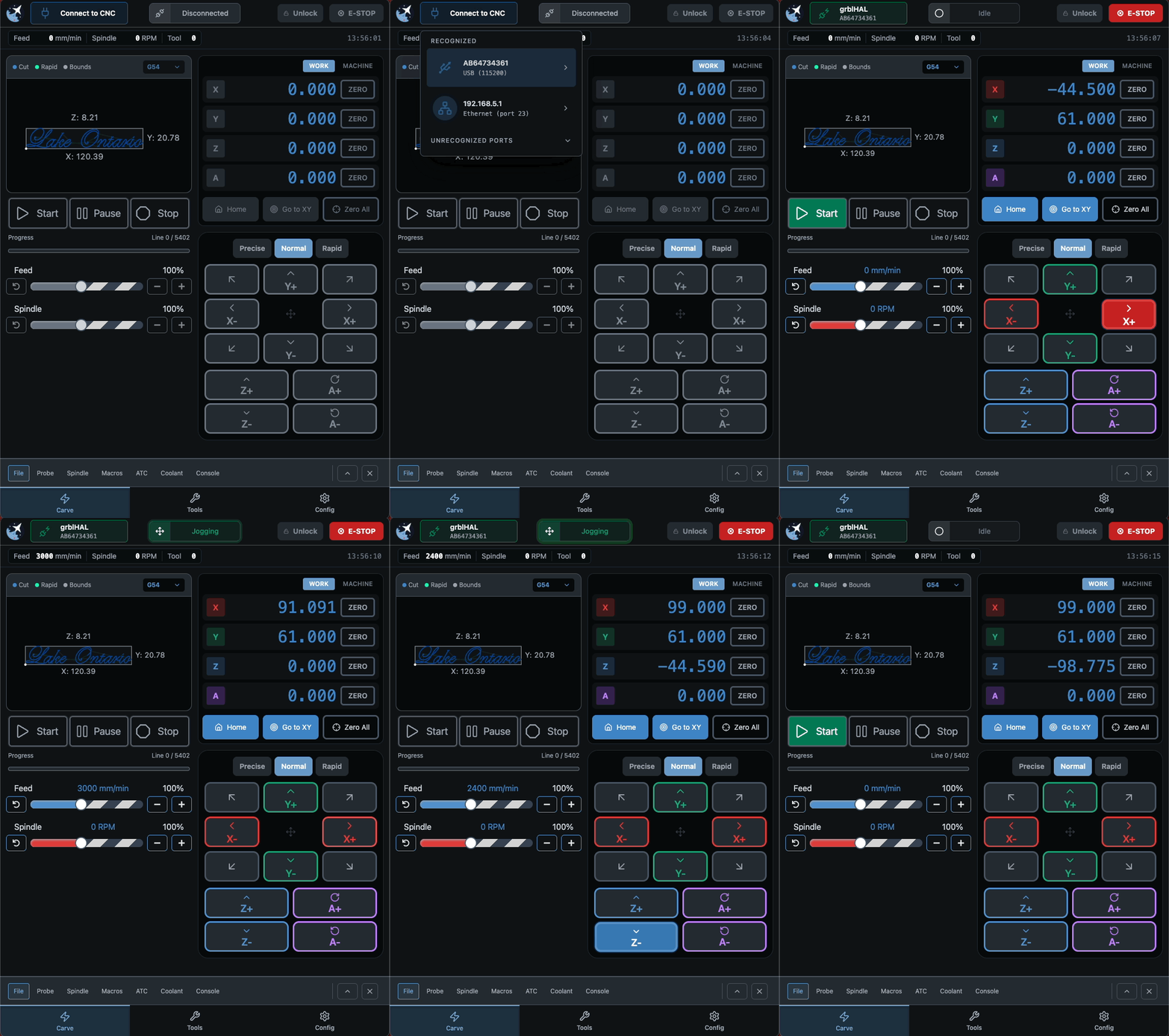
This is a smattering of bug fixes alongside updates to MK3 profiles.
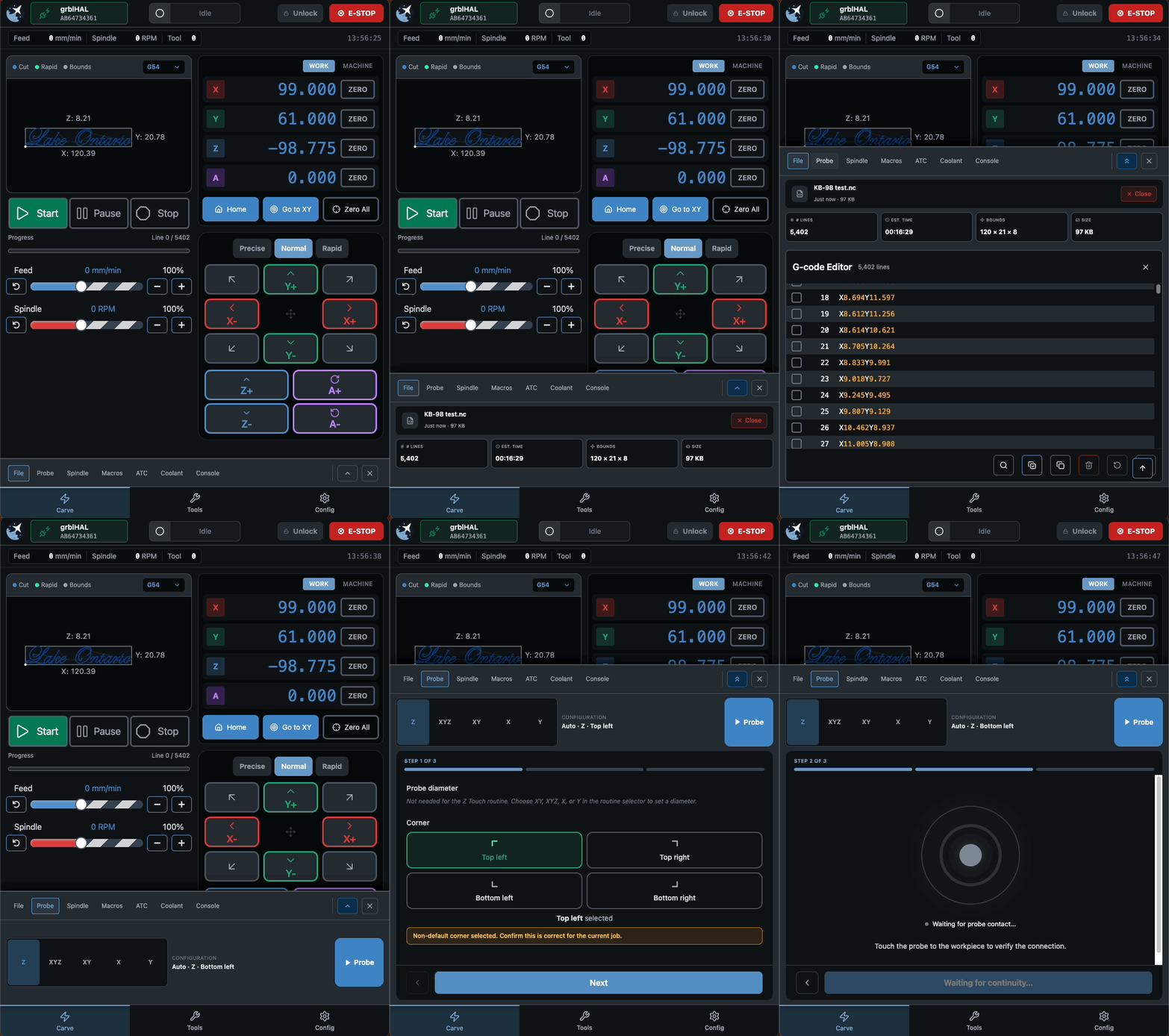
There is one major change in this build: We’re removing the corner selector on probing. It has overwhelmingly caused more problems for support than expected, and metrics show that probing the non-default corner (bottom left) is an incredibly rare act. We’ve taken steps in the past, including obvious warnings when a non-default corner was selected, yet it still continues to be a problematic functionality. While the developer team has explored further alternatives, the directives from management were to remove it entirely so we’ve done so.
All probing corner selectors have been reset to the default bottom left position.
Changes:
Removed corner selection on probing feature entirely. All corners have been reset to bottom left.
Flexible tool change routine again working as expected and not just silently completing each step.
Added $290, $291, $292, and $293 to config page for custom homing pulloffs when compiled in to grblHAL as option
Updated MK3 profiles, including a custom X homing pulloff value.
Notifications are again notifying on Alarms and Errors in the notification center (apart from homing)
Added Voron Cascade profile
Toolchange ack keybind no longer gated behind non-Tool state so should be usable again
Pulloff uses $27 if home on 0 bit not set for various Z actions instead of a fixed value in several places
Pause button now disabled when workflow already paused/in a hold state
Fix for $I polling running endlessly in situations where AXS is never reported by the controller.
In cases where AXS not parsed by controller for grblHAL, default to counting position values reported by firmware.
$G types in console now correctly echoes the response in the console instead of being swallowed by the backend.
Added new config option – portrait macro bar – which adds usable macros at the bottom of the screen in portrait mode outside of the Macro widget.
Updated styling on next button and text in dark mode in Accessory Install wizards
If you guys remember a few years ago, we used to just randomly give away bit and end mills and other random stuff. There was no entry, although we had a theme typically each week. We basically just wanted to give some little thank you’s to members of the community that were sharing their cool projects and knowledge to educate and inspire our community.
We did stop doing that for some time, mostly because we got really busy with other stuff. But I’m excited to announce that with our larger, growing team, we’re able to invest more time and effort into the little fun things I know we all enjoy.
Anyhow, feel free to share and engage with the community on CNC stuff! And maybe you’ll get some cool stuff in return!
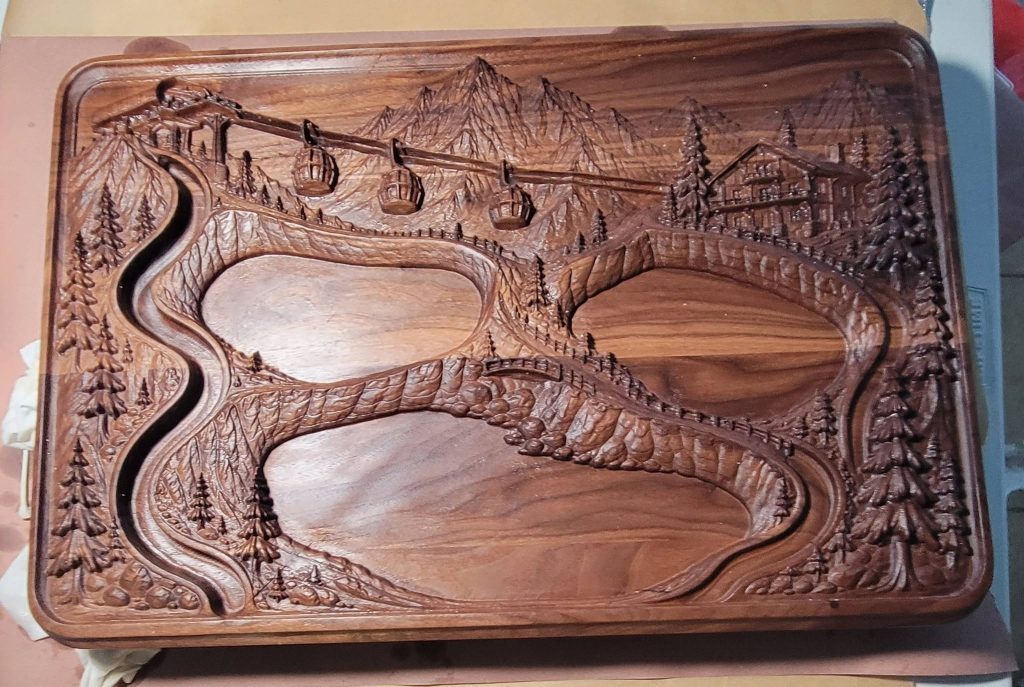
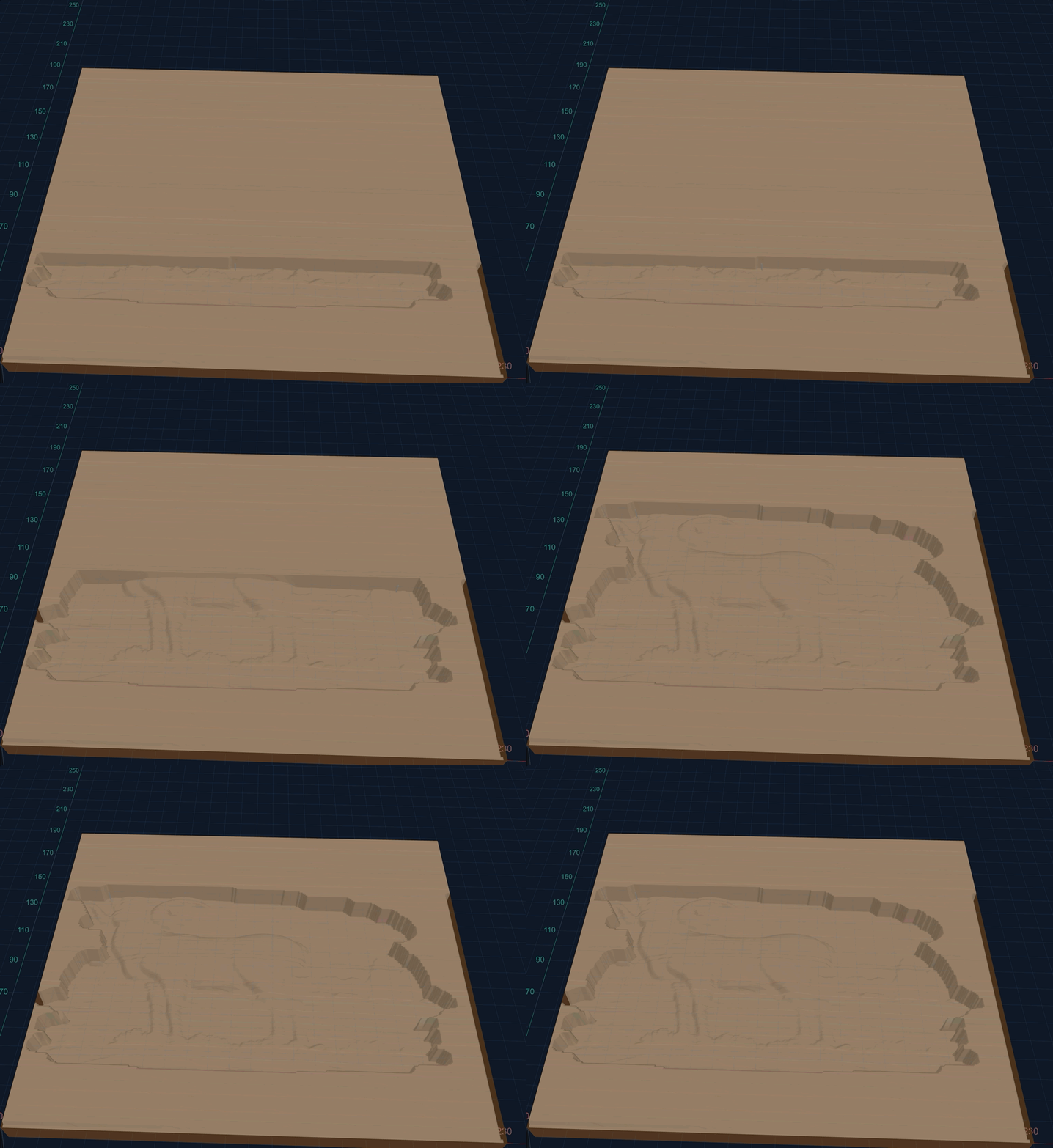
Relief carving project shared in our Facebook user group
Cutting board project shared in our Facebook user group
Changes to our lead time tracking philosophy
To be frank here, we’ve made some of our customers unhappy with our wishy washy approach to our lead times. To those people, I’m sorry, we will do better.
To address this, we’ve made a few changes to our back end processes and to some effect, our customer facing communication as well. Here’s a few problems we’ve identified.
At the root, I feel like we’ve been wishy washy on lead times because we are worried about making promises we can’t keep, so we continued to broaden and pad our lead times to avoid disappointing people. But the reality is that imprecise processes lead to imprecise results. For example, when we listed our estimated lead times or shipping times, we typically tell people which month their item will ship.
But a month is a long time, and when it will ship is ambiguous. Will it ship at the start of the month? Will it ship at the end of the month? The customer doesn’t know. So what did we change?
Rather than putting the estimated time to completion, we have an exact date for the completion.
We will aim to ship by or before that date
With an exact date, we will have an exact reference for when we need to inform customers if their order is expected to be delayed, so that we can be proactive on informing customers
We’ve rolled out this system over the last few weeks, and we’re getting things ironed out, but the team is working to adapt this.
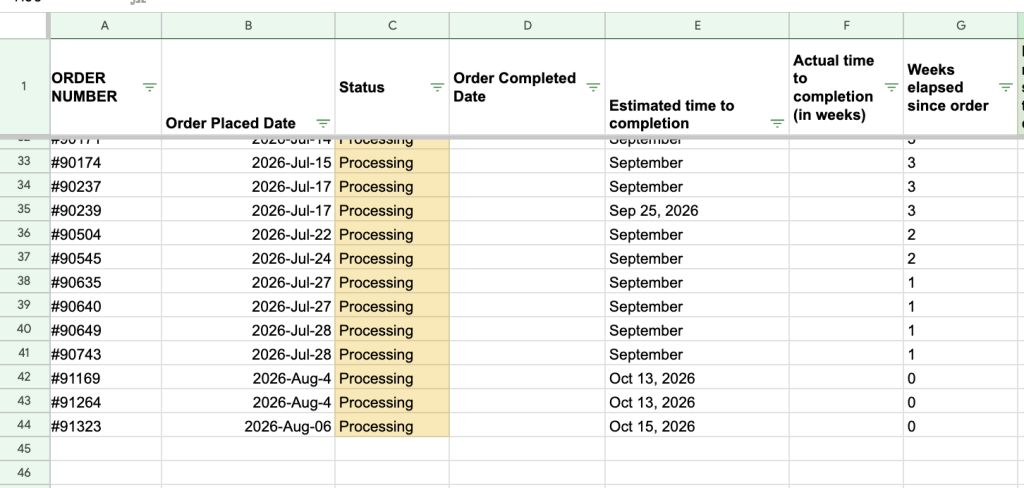
Our pending orders listEach product with a lead time comes with an exact lead time, which we will monitor and adjust
Additionally, we’re moving away from month estimates, for example “item is expected to ship in September”, to a lead time defined by a number of weeks. Why did we switch?:
As our production volumes scale up, we expect to build less in batches and more in a continual basis. In the past, we managed inventory in batches, so we would build, for example, 1000 machines at a time. However, this contributes to huge swings in inventory. For components that are smaller or less expensive, we could buy much more, while large or expensive items would be made in smaller batches. However, the quantity of parts we order each time is not limited to the size of the batch anymore
We can start better scheduling production for each product on a week to week basis, according to what products are slated to reach their ship date. This means that rather than building an arbitrary number of machines, we have an actual minimum number we need to build each day or week
We can keep track of our timeliness. We can see what percentage of machines we are actually shipping on time, and if we need to make any adjustments to our processes or production capacity accordingly.
We understand, especially as more and more of our customers are moving to building business around their machines, that timeliness is important. And so to reflect this understanding, we will continue to work on improving our processes and decrease lead times.
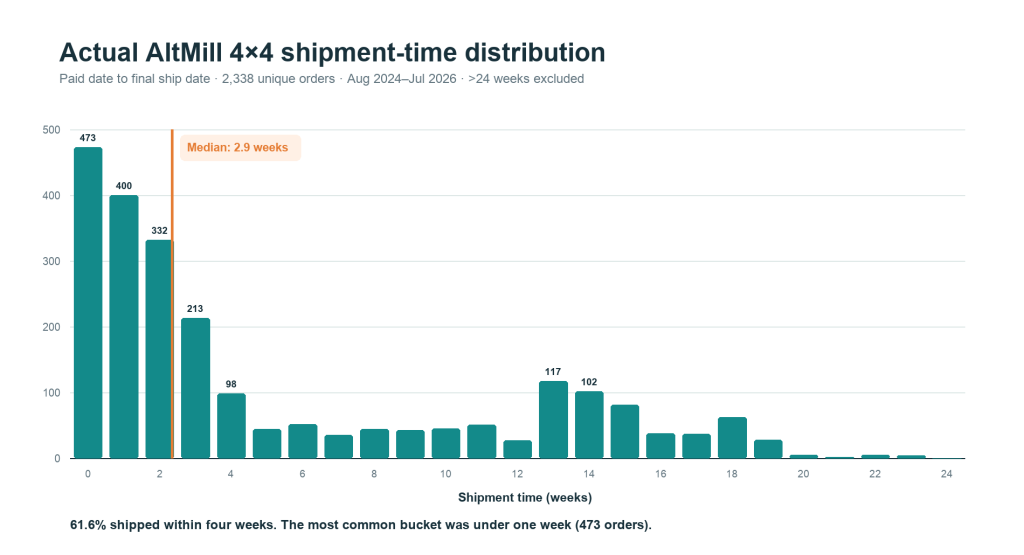
24 months ago, our average lead time for the AltMill 4×4 was around 17 weeks. Now machines are shipping on average in 0.7 weeks.
“Starter Kits” now available for AltMill 2×4, 4×4, and 4×8
We just posted starter kits available on our store for the AltMill line. As you guys may or may not know, we set up the LongMill Beginners Kits way back because we wanted to have a simple package for people to be able to order with basically everything you need to get started. Since then, at least according to Nathan, about 80% people get the beginners kit.
We also wanted to be able to pre-pack stuff because we can have stuff prepped in advance and have shorter lead times, so we also made the price slightly less than buying everything separately.
AltMill 4×8
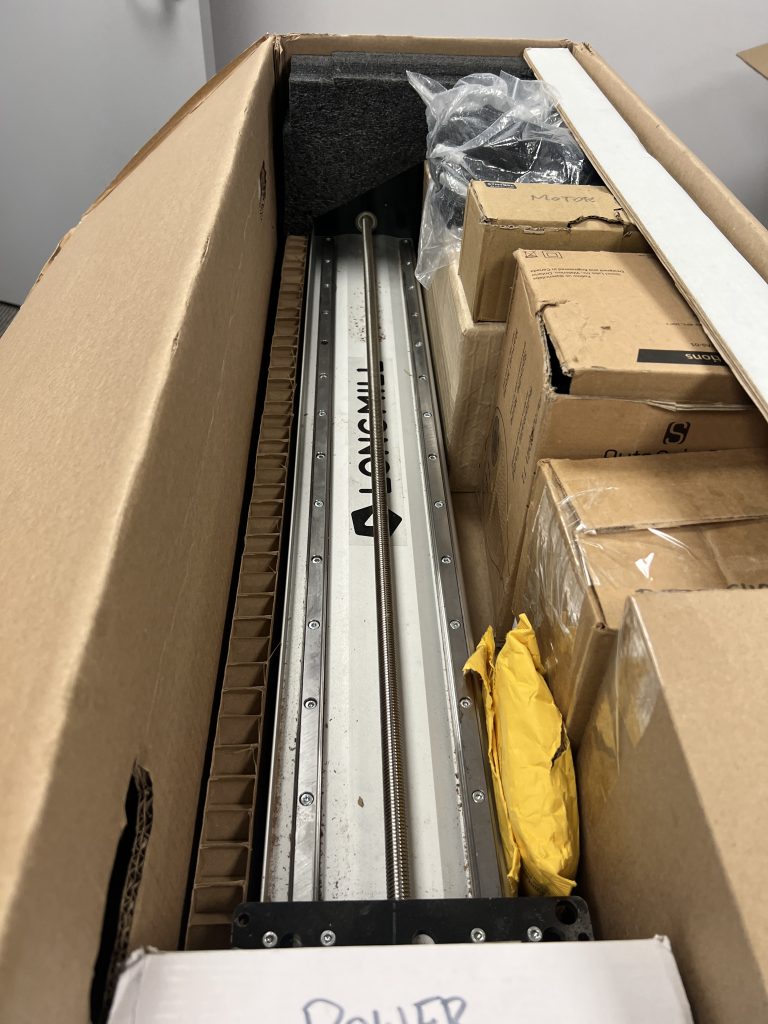
It’s an exciting month as we’ve now received enough parts to build another 300 AltMill 4x8s! We have now started shipping out the remaining 4×8 machines that are in the queue.
Lead times are expected to be approximately 4 weeks after order. We expect lead times to start coming down as we continue pre-assembly for components.
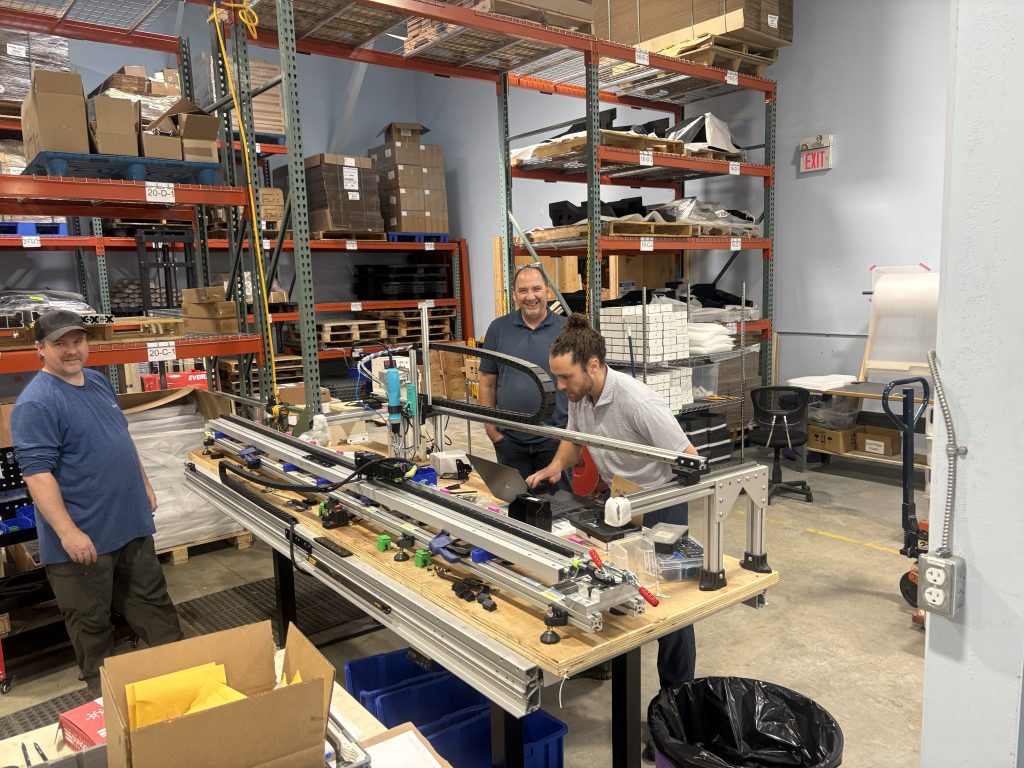
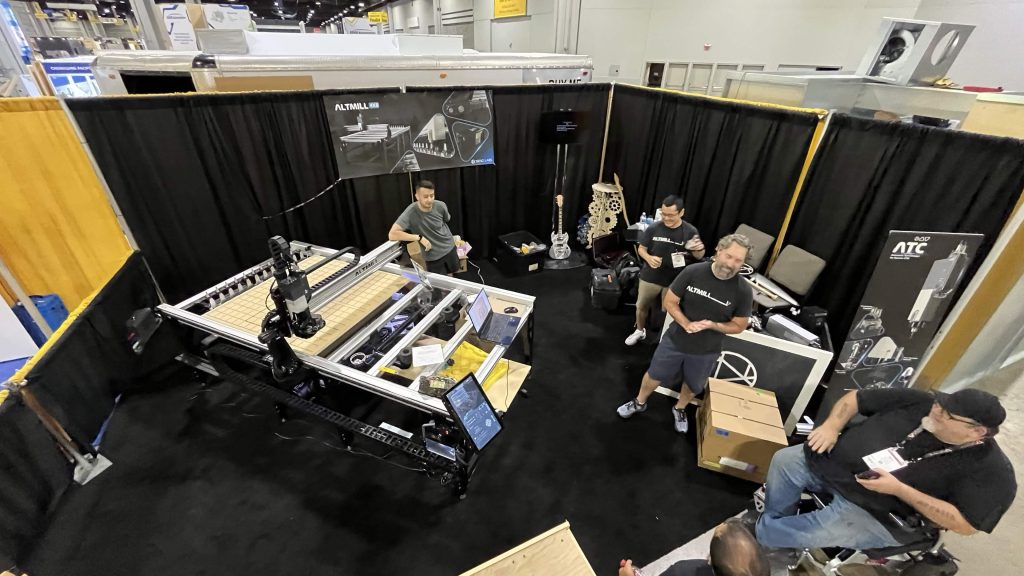
Setting up the assembly station for the Y axis rail on the 4×8Showing off the 4×8 and the vacuum table at IWF
ATC
Parts for the ATC arrived this past month and we are pushing out more ATCs each week. We’re expecting to ship around 32 units per week until we clear the queue.
For new orders at the time of writing, we are expecting another batch of 90 spindle parts to arrive Oct 10th, which means that any new orders placed now will start shipping in mid-Oct. Once the parts arrive, we expect to be building around 30 units per week. We are expecting another batch of parts for another 70 spindle units to come in November as well. Lead times will be adjusted based on sales demand, but we anticipate being able to build and pre-pack some ATCs so that we can keep lead times lower moving forward from there.
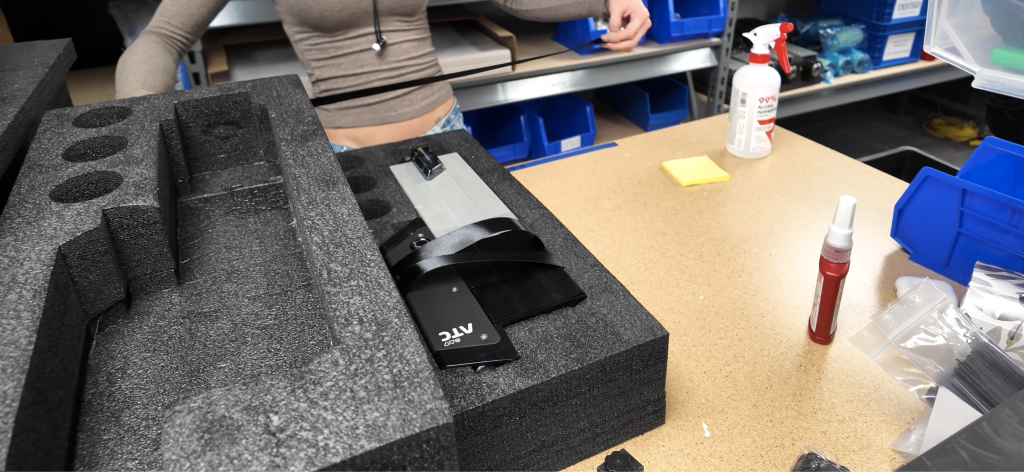
ATC assembly station
LongMill MK3
We have started assembly process for LongMill MK3 in August and have been working to prep for shipping this month. At the time of writing (Aug 25th), we should be getting the rest of our packaging materials tomorrow. Based on our current schedule and assembly times, we are expecting the first machines to start shipping mid-Sept.
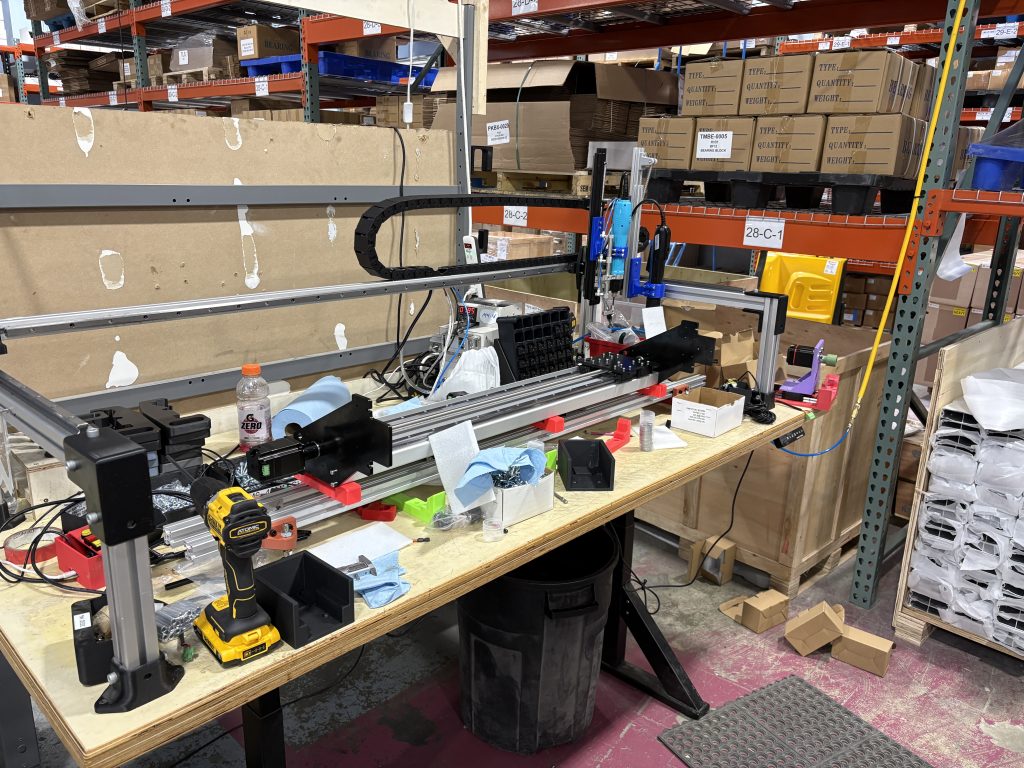
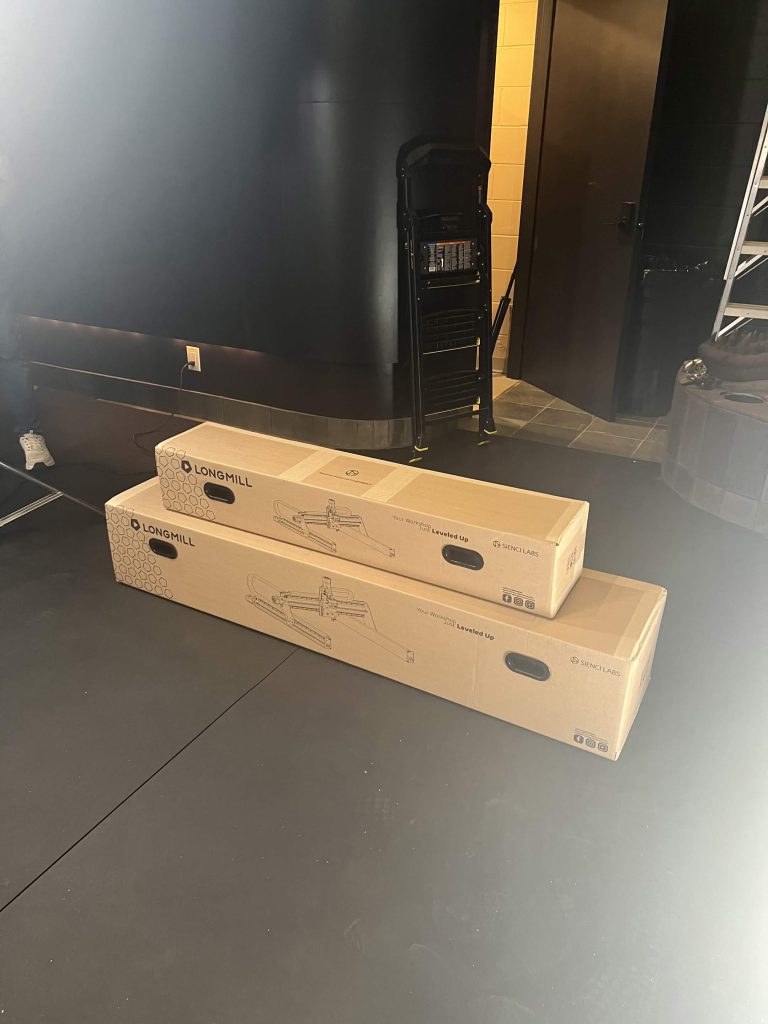
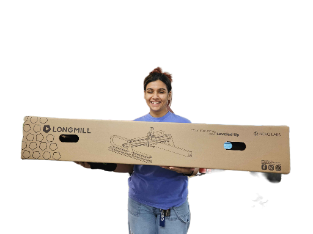
Assembly station for the X rail on the LongMill MK3A quick look at finalized boxed for the LongMill MK3
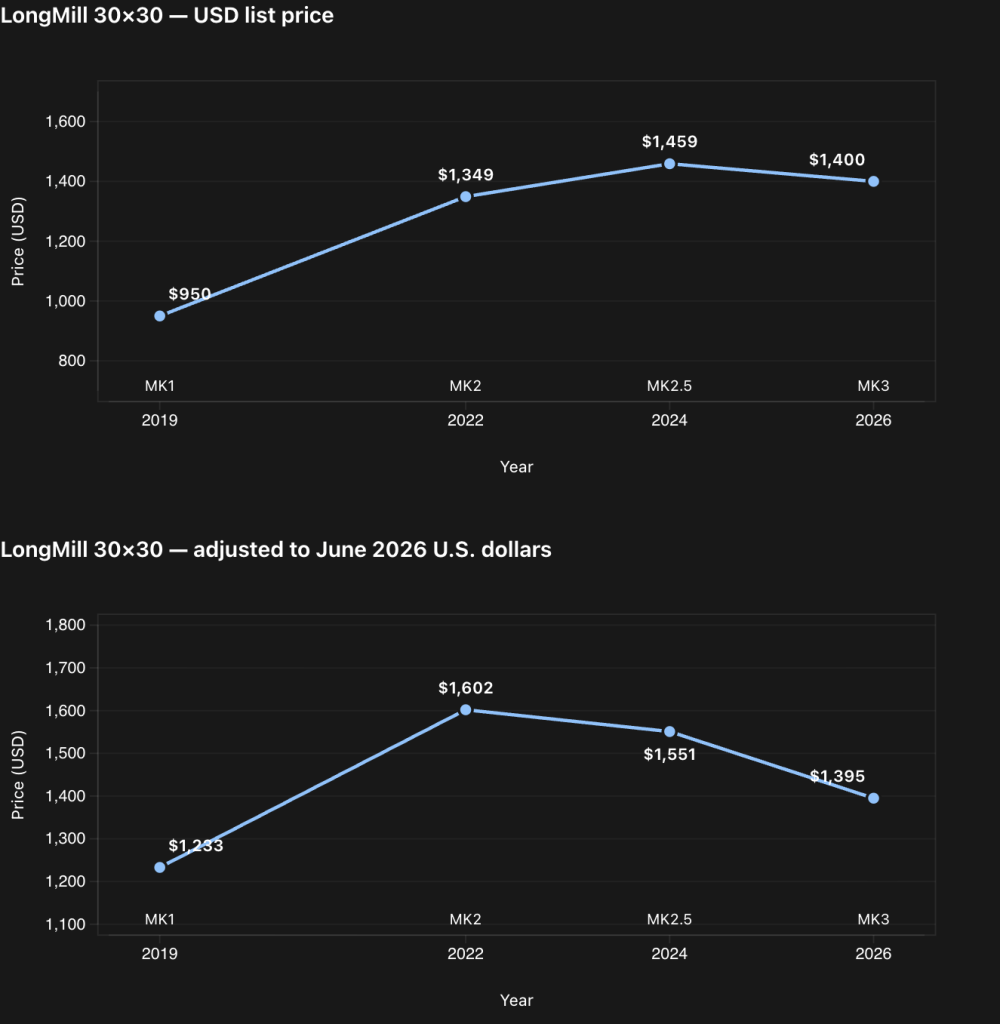
I thought it would be interesting to look at price changes for the LongMill since 2019 when it first came out to today, with the first graph being the list price (USD), and the second graph adjusted for inflation. Although the price for the LongMill list price hasn’t changed too much, when you adjust for inflation, we actually got value cost back down to close to our first version.
What contributes to the change in pricing? Here are some reasons:
Substantially higher production volume means more efficient production cost
Improved quality. While the cost of producing precision parts has gone up, this also means that our other costs like replacements and customer service costs have gone down
Engineering optimization, namely the electronics. Redesigned electronics has reduced cost by nearly 50% while being several magnitudes more powerful and reliable.
Additionally, the LongMill MK3 is around 3x more rigid and 2x faster than the LongMill MK1. I figured I would share this to contextualize the big leaps we’ve made in the industry.
Anyhow, in the grand scheme of things, things haven’t picked up in demand for the the new LongMill MK3 yet, and I think it’s mostly because the world hasn’t seen how amazing it is yet. And there’s a lot of stuff that people won’t really get to experience until they get their hand on it, so I’m really excited to be shipping these machines out soon!
AltMill Clear Cut Dust Shoe
Ok these have been a bit of a PITA, but I’m excited to share that we have a large batch of Clear Cut Dust Shoes coming in mid-Sept and are now up for sale.
We had a bunch of little issues with the dust shoe that kind of pushed the timelines for offering these up for general sale. First was that we had some quality issues with the molding where parts would come out weak or cracking. Another major issue was dealing with magnets coming out or not being installed correctly. We’ve since worked to resolve these issues and been pushing the manufacturing for these.
To ensure that we had enough dust shoes, we’ve mainly stuck to prioritizing selling the dust shoes with the spindles, as we mainly designed the dust shoes to work with our spindles, but we do want to make them available for everyone.
I’m happy to announce that we should be getting around 600 more units soon for individual orders in the next few weeks, and we’ll have another 3000 more coming in mid-Oct. Given that we sold out the 150 units in 2 days when we first launched these in Feb 2026, we anticipate we should move through these pretty quickly.
Ontario CSA compliant power supplies
We continue to work towards offering power supplies for AltMill users in Ontario, with the expected completion date in November. We’ve now completed the design phase and expect to start the certification and testing process this month. We have been working with Intertek in the design phase so we are confident that the certification will proceed in a timely manner.
Also side note, someone was asking about 220V compatibility. The LongMill MK3 will be both 110V and 220V compatible. The new certified power supplies are also dual voltage, but due to safety standards we can only certify one voltage at a time, but we’ll look into doing things for both.
An even bigger ATC?
Last year we foreshadowed the potential release of larger spindles by showing off the AltMill with a 4.5KW spindle. As you guys might know, with the AltMill’s rigidity, it can easily handle larger spindles. However we started off with 1.5KW and 2.2KW spindles as they are more accessible for most users.
If you wanna see the video of our testing from last year…
Well over the last couple months we’ve been playing around with a 4.5KW spindle, which works with the same type of electronics and system as our current 2.2KW ATC. This comes as a substantial potential option for increasing productivity for our pro-level and production level users.
We still have a lot of work scaling up production and getting our lead times down for the 2.2KW ATC, so that still continues to be our main focus, but figured I should share this as work comes together for the larger ATC.
SLB EXT V2 and SLB-LITE
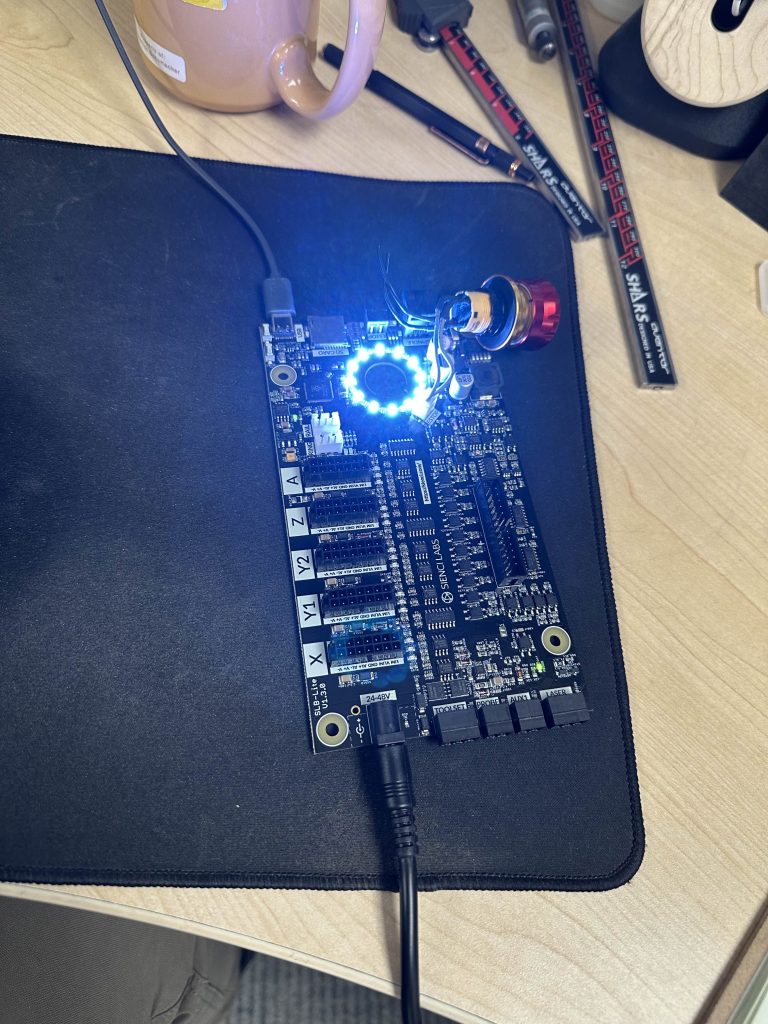
The first batch of SLB-LITEs have arrived to our shop! We’re excited to start rolling this out into building the LongMill MK3s. We’ve successfully tested and flashed the first 350 units, which will go in to the first LongMill MK3 kits. Otherwise we are continuing to work on development for the SLB-EXT V2 used for AltMill.
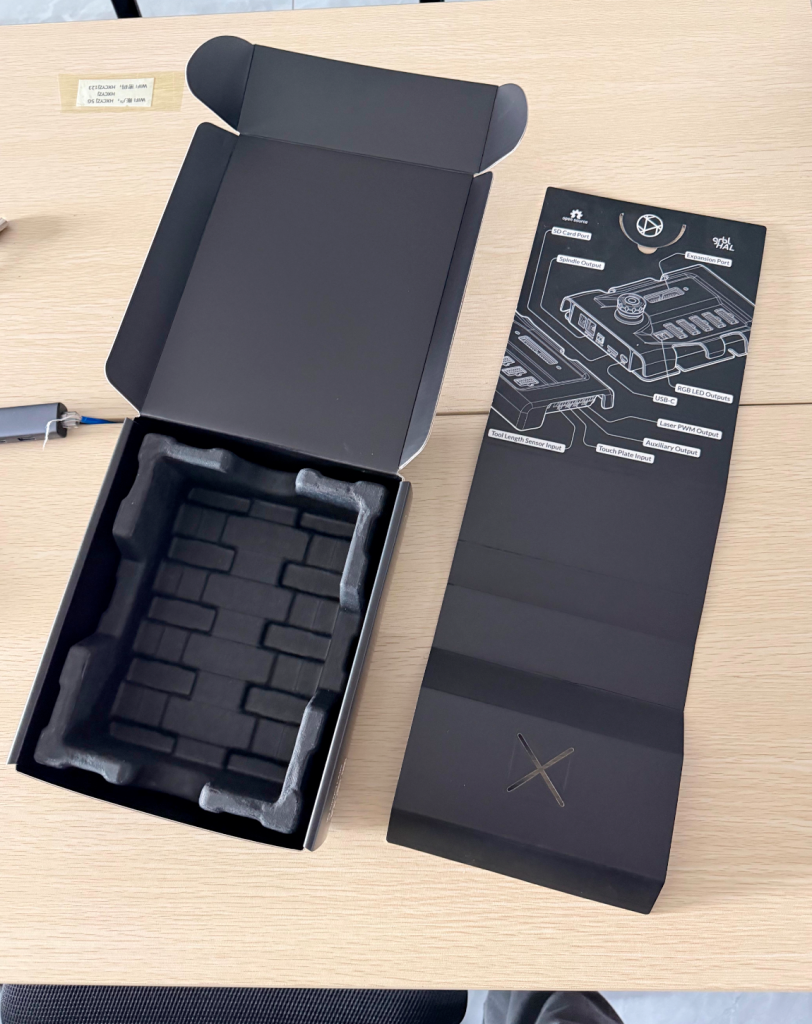
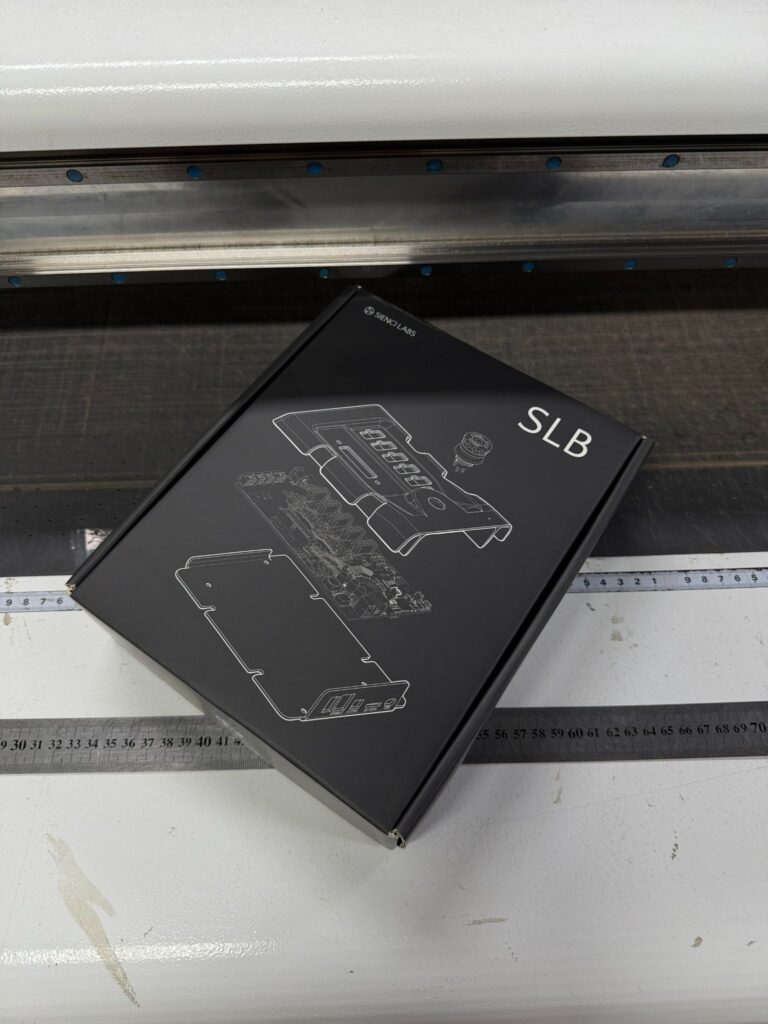
First look at completed production packagingThe first fully production working SLB-Lite
New gControl?
gSender team and the engineering team as a whole have been absolutely cooking with the imminent shift towards on-board machine computing.
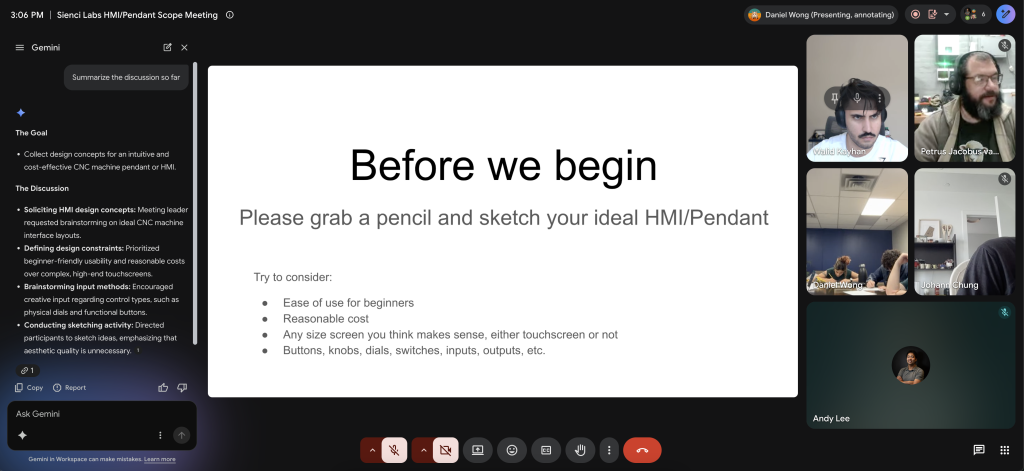
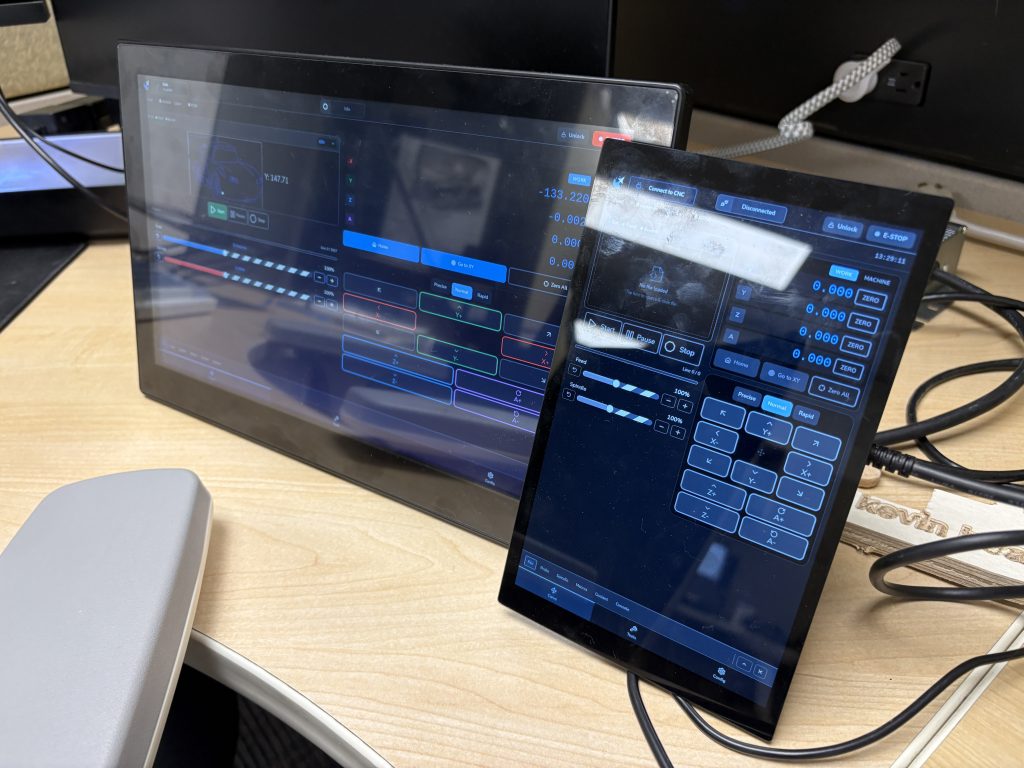
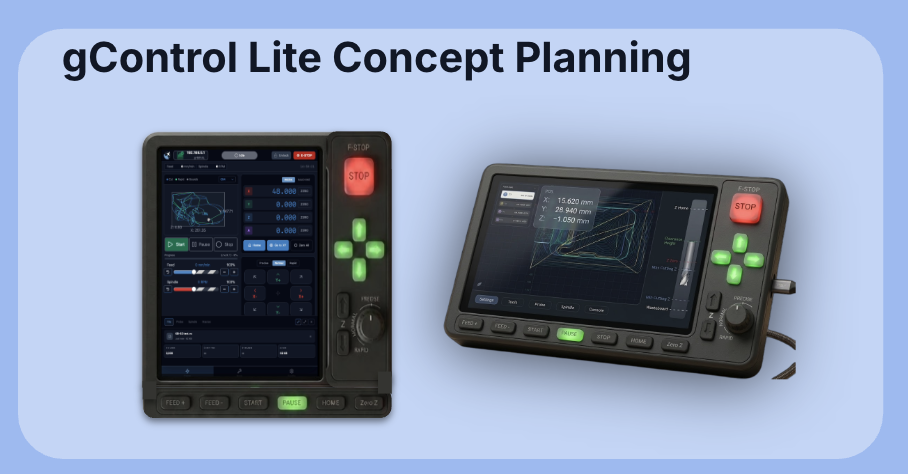
Design meeting for HMITesting different screen sizes and form factorsAI generated gControl concepts
As we mentioned in previous updates, we want to build a new version of the gControl panel computer to make it substantially cheaper.
There have been a number of bonus improvements as we continue going down this path including:
Improvements to UI, as we move towards a more touch-focused interface
Improved process for connecting your phone to gSender (for controlling your machine remotely on your phone)
Over the recent months, something that our community has brought up was our relatively short warranty times for our machines, and why that was the case. To be frank, we came up with the warranty times a long time ago without too much thought and never really ended up changing or revisiting them. However with the changes to consumer expectations around machine warranty, we are addressing these expectations.
With regards to how we approached our initial warranty lengths, they were relatively short because we knew that most issues that happen with a machine typically happen within the first few months. Typically these address accidents and manufacturing defects that are caught nearly right away. However, given how rare long term issues are, we would typically help with service and replacement parts for customers after the warranty period for free or at minimal cost. Additionally, we felt that overall, the cheapest, fastest, and most effective way for us to provide support was simply to:
Provide documentation so that customers can fix their machines themselves
Provide all of the open source designs so that customers can use parts off the shelf and from other vendors
Order parts from us and get them quickly from our store if they want to use OEM parts
Have replacement parts on hand
For most of our existence, having a shorter warranty has not been a significant point of contention, because we had a strong reputation for a high standard of customer service, affordable parts, and openness of our designs which allowed customers to fix things themselves. Generally, this meant that having a short warranty didn’t actually impact the customers in the long run.
Based on our data, our cost for parts for replacement each month has been relatively low, around $1300 to $1500 per month (around 0.35% of the cost of the machine). We’ve also found that the cost of the service for our support to help with replacements is more than the cost of the parts themselves. Even if we were to increase the warranty, it wouldn’t increase our costs as we still help every customer regardless of whether they are in or out of warranty. So, our volume of technical support wouldn’t change.
Additionally, in a lot of cases, we will still provide replacement parts to customers even if they are out of warranty. So we don’t expect the volume of cost for replacement parts to increase that much either.
So why are we increasing the warranty of our machines? Well, we believe:
It will provide more peace of mind for customers
Meet expected standards for our industry
Align with the high quality technical support we already provide
But most importantly, we believe it will cause a fundamental shift in our thinking for our company and development in the long term. For those who have been following us, we have been a fast moving, fast developing, and innovative company. Long term planning hasn’t been one our our strong suits. Now that we’ve grown and are becoming a more mature company, and customers expect more from us and more from our products. Having a longer warranty also shifts are thinking of:
Did we engineer our parts and products to last a long time?
Can we have the resources available to help our customers through their whole journey?
Are we keeping track of what we have learned over the years to make our machines more reliable and long lasting?
I believe that our confidence in our engineering should be reflected in the warranty as well.
Of course, these principals have always been something important to us internally, but not strongly reflected in the warranty itself. Our warranty should reflect our confidence in how long our machines are going to last, and it also serves as our written commitment to making sure the machines are built to a high standard.
In preparation for the warranty extension, we have also been working on:
Updating our store with more replacement part availability
Tracking and analysis of our failure rates for parts
Looking at our QA process
Improving the quality of our parts
We also sat down with the team to address the purpose of what a warranty means, which includes:
An increased standard for durability
A closer analysis of the longevity of the machine, and what improvements to the design we should make to improve durability and reduce issues
Redefining our own confidence in our ability to produce quality machines
A culture of accountability for us to be helping customers through their whole journey in using our products
Additionally, there is a financial/marketing incentive. More customers are making buying decisions based on warranty. This means that we also expect an uplift in sales that will come from increasing the warranty. And based on our calculations, even if we double the number of replacement parts we need to issue, we only need to sell an extra 2-3 machines per month to cover that cost. So overall, we expect that it will only take a little extra financial benefit for us to increase the warranty period as well.
So what’s happening next?
All of our CNC machines sold from August 1, 2025 and onwards will retroactively have their warranty extended to be 1 year from the time of when it arrived at your door.
If customers have had to pay out of pocket for out of warranty service through us in the period from August 1, 2025 till today, requested technical support from us, and would have had their warranties covered with the warranty extension, we will refund them the costs through the method they originally paid or provide equivalent store credit (at our discretion).
We will review our past tickets and records and refund customers automatically if you fall into our category of customers who paid for parts out of warranty for machines shipped and arrived after August 1, 2025. If you are a customer and do not hear from us, and had to pay out of pocket for the out of warranty service, please contact us directly through our contact form.
Additionally, warranties on parts will be updated and increased on a case by case basis.
Review of data
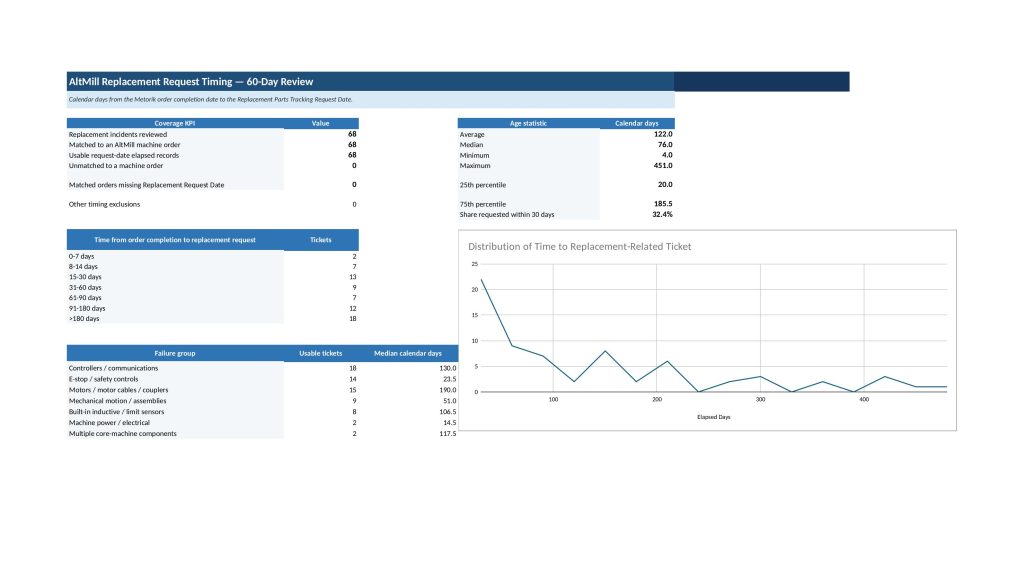
To give some context of what is going on in the back end, we reviewed tickets from the last 60 days for the AltMill.
Here’s a look at our stats for warranty issues and tickets.
In the last 60 days, approximately 60.3% of issues happened within the first 120 days.
Increasing the warranty from 120 days to one year (365 days) means capturing approximately 92.6% of the issues, rather than 60.3%
Controller and motor/coupler issues (electrical) make up the majority of issues, making up 69%
Changes to expect
With all of the data analyzed, there are a few changes in the works to help us focus on new areas of improvement.
First is reviewing the designs of our key failure points, mainly with the electronics systems. We’ve observed that most of the issues come from controller/estop or motor/coupler related issues. With current development of the new SLB-EXT V2 and SLB-Lite, with more robust components and design, we expect to see a significant decrease in these issues.
We’re also reviewing our QA processes, assembly instructions, and design to improve the overall reliability of the couplers as well, which also contributes to a big part of our overall pool of issues.
We’ve also set up some processes to keep a continual eye on issues week to week to identify trends so that they can be addressed and directed to the right people within the company to resolve. This includes weekly reports and analysis of technical support tickets, review of issues on our forum and other channels, and software usage logs.
Our main goal is to continue to improve the overall performance and reliability of our products. While an update to our warranty policies is a reflection of that, I believe that continual improvement should remain the primary focus of our development and ensure that the overall experience, warranty or not, is a great as it can be.
Hey everyone, welcome back. Here’s August 2026 Production Update!
US/Canada Tariffs
A number of our American customers have been inquiring about the status of tariffs with the recent announcement by the U.S. government on potential tariffs being applied to Canadian products.
These tariffs are aimed to target three groups of products:
Alcoholic beverages
Dairy
Motor Vehicles
Based on our cross-reference of all of the HS codes that are expected to be affected, we have determined that the products we are selling to the U.S. are not part of that group of HS codes. This means that we do not expect tariffs to be applied to our products.
Because the tariff situation between the U.S. and Canada is still a little bit unpredictable, we can reassure that we will handle this in one of two ways for our US neighbours.
For orders that have been placed before the tariffs have been applied, we will absorb the cost of any tariffs (if there are any) and continue to ship our products as DDP. This means that any duties and tariffs will be billed directly to us and will not impact the customer.
If the tariffs create a situation where it is unsustainable or not possible for us to reasonably absorb the cost, then we will communicate this to the customer and either come to another arrangement or allow the customer to cancel their order completely.
We will make an update to our policies if the tariffs end up being implemented.
Based on our experience over the last few years, and due to our CUSMCA/USMCA certification, we do not expect there to be tariffs in the future.
Customer Support Updates
We’ve been putting a lot of work into ramping up and improving our support process.
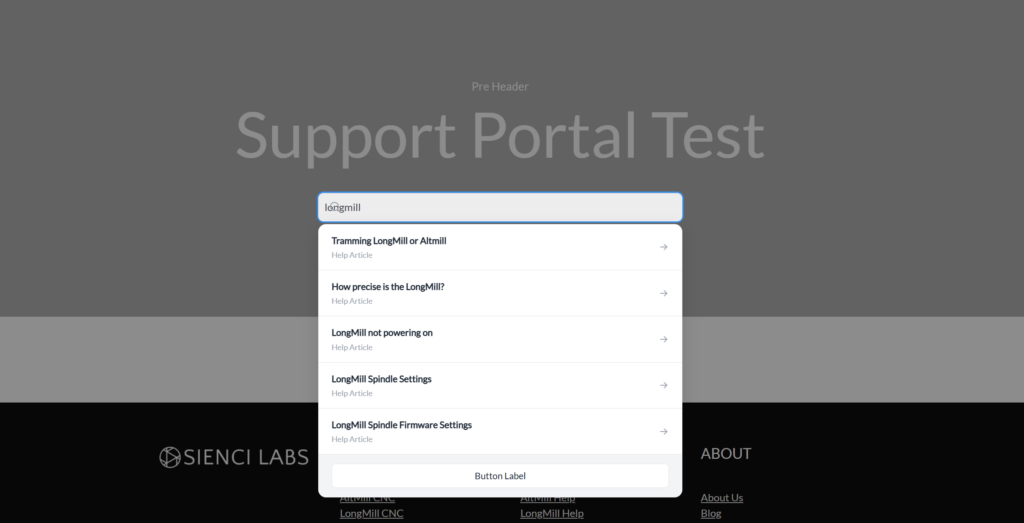
Our new support page is now live! A few updates to this:
A more specific step by step process for completing tickets so that we can determine relevant vs irrelevant information
Built in search function to suggest articles and information that may help with the issue
Tracking to see which issues are the most common
Tracking to see how often the issues that we suggest are correct in helping the user
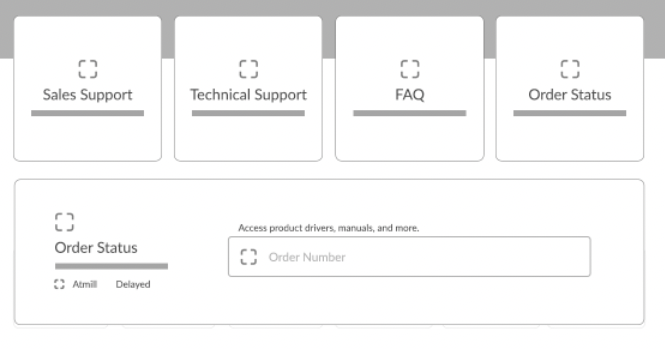
We also have now revamped order status tracking in our website, which allows customers to better keep track of when they expect to have their items ship. You can now enter your order information and get a list of all of the items that you ordered. Soon, we’ll have the lead times tied to each of the products, so that you can get the estimated lead time for each of the products. This will also give us a better idea on our delivery timeliness success rate, as well as more easily identify orders if we are expecting them to be delayed, so that we can communicate with the customer better.
We’ve also had a lot of discussions with customers and our team in establishing better after sales support, with initiatives currently underplace to:
Provide maintenance kits for lubrication and replacing wear items
Parts available for spares and replacements
Updates to machine use and maintenance resource pages
More support videos
Lastly, it’s been mentioned to us about our warranty period for our machines. We are coordinating with the team to establish longer and improved warranty periods and support for our products.
For people wondering why our warranty is so short right now:
First of all, we set up this warranty system years and years ago, and we didn’t really revise it because it wasn’t something that people were talking about that much.
Overall, we haven’t had many issues with our warranty length because the issues are relatively rare. When we do need to send out replacements, we will typically do it for free or at minimal cost, even if the warranty period is over.
Practically speaking, the most issues happen within the first 30 to 60 days of ownership. It’s very rare for customers to have issues after the fact, which means that even though our warranty period is pretty short, people don’t really use the warranty after the first setup.
However, I wanted to bring this up because this is something that a couple of potential customers have been asking about. And I guess if it’s not going to impact anything to provide a longer warranty and offer additional peace of mind, then why not consider it?
Here are some things that we’ve learned:
The overall cost for us to provide replacements has been relatively low month over month. Based on my calculations, this is about 0.35% of the overall machine value on average.
Even if this were to double, the potential uplift in sales that we’d want to see in providing the longer return period, it would only need to be covered by around two or three machine sales per month.
Regardless of whether the customer needs to purchase a part or not, we provide the same level of service for the customers to troubleshoot and repair their machines. We expect the service we need to provide and the costs associated with it to be relatively the same.
We also expect that it will make it a lot easier for our team to handle repair issues because we can just issue replacement parts without having to figure out the transaction process as well.
All of which to say, it seems like we can significantly increase the warranty period while saving some costs in some areas and also with minimal impact to our bottom line. We also believe that offering the additional warranty will provide better peace of mind to customers, so from my perspective it seems like a win-win situation.
In any case, we are working on setting this up and establishing our processes, and we will also increase warranty for customers that already exist retroactively.If customers have paid for replacement parts due to warranty service that happened outside of their warranty period, then we will work with the customers to either refund them or provide them credit appropriate to their situation.
Tool Length Sensor
We recently launched the TLS in the past month to great reception. After receiving customer feedback and getting through our first batch of production here’s some updates and changes to expect:
Updates to the workflow in gSender
Ability to fine tune fast and slow find settings
Improved setup videos, instructions, and resources
Improved and streamlined packaging
Improving our Supply Chain Process
Alongside customer service and care improvements and restructuring, we are also working on improvements and restructuring to our supply chain process, with the aim to reduce delays and allow us to react more quickly to changing demand for our products. Some initiatives put into place include:
Automated monitoring of supply chain communication to tag and flag shipments
New review process for Bill of Materials for products
Tracking of supplier reliability and timeliness
Reorganization of our physical space for increased storage capacity
Cross departmental access to key reports to track supply and inventory
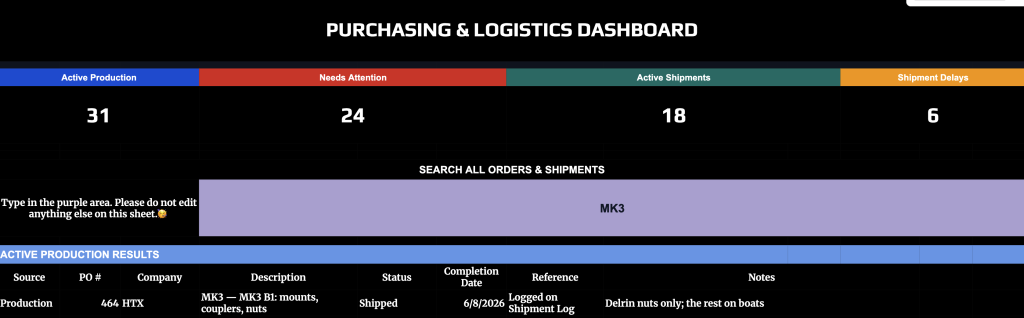
A look at the production dashboard
We are also slowly moving away from a batching system to a rolling inventory system. As our supply chain becomes more diverse, rather than building in big batches, each part will eventually be ordered as needed on an individual basis. This means that for parts like fasteners that are used in many different products, we can order them in larger quantities for multiple product lines.
You’ll likely see some changes in how we track our lead times from expected shipping month to number of weeks to ship. This gives us a more exact time when products will ship, rather than a vague date target. This will allow us to better keep track of our shipping ability and work with customers in the case of production delays.
We have also continued to grow our team on the supply chain and inventory side, with two new team members in the department and with a current search for an extra third member.
AltMill 4×8 Production
First, please note that you can check the status of your order and when it is expected to ship in the Order Status page.
AltMill 4×8 machines are expected to start shipping at the earliest on Aug 14 pending the arrival of additional rack and pinion hardware, but with assembly and processing time, most likely to start shipping between the end of August to first week of September. The remaining batch of machines in the queue are expected to clear out at the end of September. In the meantime, we are prepping parts and production to push machines out quickly once the parts arrive.
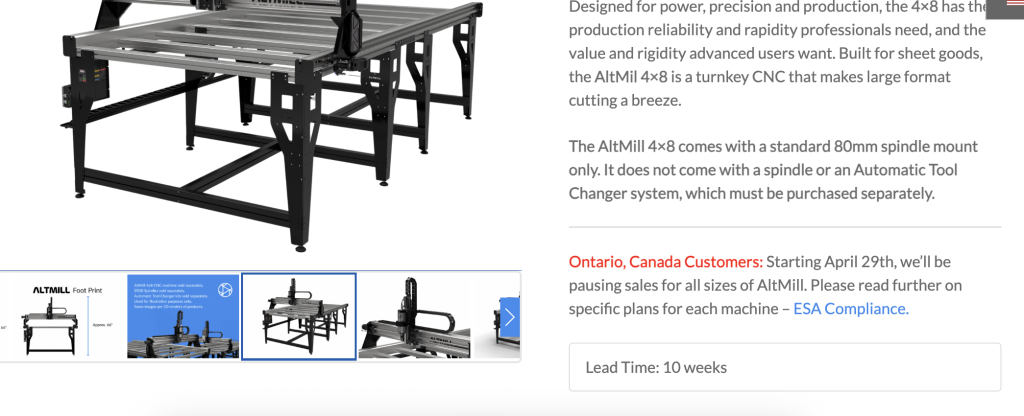
The current lead time for AltMill 4×8 is 10 weeks.
To prevent having long lead times in the future, we have about 300 machines on order for our second batch, and we expect to have about a years worth of inventory on hand. Could be less over time given that we tend to get a lot more orders as we decrease our lead times, but for now, we’ve made sure to pad our stock as much as we can.
Auto Tool Changer Production
ATCs are expected to resume shipping August 23rd, pending the arrival of a shipment of spindles around August 10. Once these spindles arrive, the remaining 58 orders in the queue will start shipping, with all current orders expected to be fulfilled by September 13.
The current lead time for ATCs is 8 weeks, so orders placed today are expected to ship early October. The lead time is due to the spindle being reviewed and modified.
Power Supply Certification
Prototyping the case for the power supply
With some things going on with CSA-related certification to do, we’ve been working on designing, developing, and testing our own power supply designs for the next iteration of our machines. During this rework, we have put sales within Ontario for the LongMill MK2.5 and AltMill machines on pause until the rework is completed. Customers outside of Ontario are not affected, and LongMill MK3 will already come with Ontario compliant power supplies.
With the development of the SLB-EXT V2, we are revising the power handling and power shutoff mechanisms away from the controller, which better complies with Ontario safety standards. Although meeting these standards are not required in many other regions, we expect this work to overall improve safety for the machines and improve safety compliance in other markets in the long run.
Current work being done now include:
Testing of power supplies in hot/cold conditions
Power draw and handling
Custom PCB design
Fuse testing and trip behavior
We now have very few (if any) LongMill MK2.5 machines, and users in Ontario and the rest of the world should expect to receive their LongMill MK3 machines in September. Ontario customers waiting on AltMills should expect to see them return for sale in November this year.
LongMill MK3
A bit more work done with the LongMill MK3 in the past month, with our focuses mostly with
Resource development and assembly manuals
Packaging design and drop testing
General machine testing
Many of the parts for the LongMill MK3 have now been received this month, and we are going through the setup for the assembly process.
Nikhila with our production boxLongMill MK3 rails in packaging for testingTapping Y rail end plates
We are expecting to start shipping LongMill MK3 in mid-September.
SLB-LITE and SLB-EXT V2
We are now reaching the final stages of SLB-LITE and SLB-EXT V2 development. Main work done for this month include:
Design and planning for testing jigs
Design and planning for firmware flashing
Testing and updates to firmware
We are also expecting new packaging and initial batches of controllers to arrive soon in preparation for our first batch of LongMill MK3 machines.
A number of our American customers have been inquiring about the status of tariffs with the recent announcement by the U.S. government on potential tariffs being applied to Canadian products.
These tariffs are aimed to target three groups of products:
Alcoholic beverages
Dairy
Motor vehicles
Based on our cross-reference of all of the HS codes that are expected to be affected, we have determined that the products we are selling to the U.S. are not part of that group of HS codes. This means that we do not expect tariffs to be applied to our products.
Because the tariff situation between the U.S. and Canada is still a little bit unpredictable, we can reassure that we will handle this in one of two ways for our US neighbours.
For orders that have been placed before the tariffs have been applied, we will absorb the cost of any tariffs (if there are any) and continue to ship our products as DDP. This means that any duties and tariffs will be billed directly to us and will not impact the customer.
If the tariffs create a situation where it is unsustainable or not possible for us to reasonably absorb the cost, then we will communicate this to the customer and either come to another arrangement or allow the customer to cancel their order completely.
We will make an update to our policies if the tariffs end up being implemented.
Based on our experience over the last few years, due to our CUSMCA/USMCA certification, we do not expect there to be tariffs in the future.
Hey folks, I’m excited to share some of the work the gSender team has been doing that’ll be coming down the pipeline as Edge releases soon.
gSender 1.6.3 was recently released, but maintenance is not the only thing the team has been working on – we’re continuing to develop new features on our internal builds to expand our capabilities or meet the needs of common customer requests.
Today, I’d like to show some previews of just some of these new features, available soon for testing as 1.7.0-Edge-1.
Visualizer Improvements
Philosophy
The visualizer has long been the centerpiece of gSender’s interface, letting users see their position, explore their toolpath and tool changes, and connect what’s happening on screen with the physical machine. That said, while it’s received a number of improvements over the years, it’s largely been the same component library.
With this upcoming release, we’ve rewritten the existing library for massive performance improvements and new functionality.
New Visualizer Features
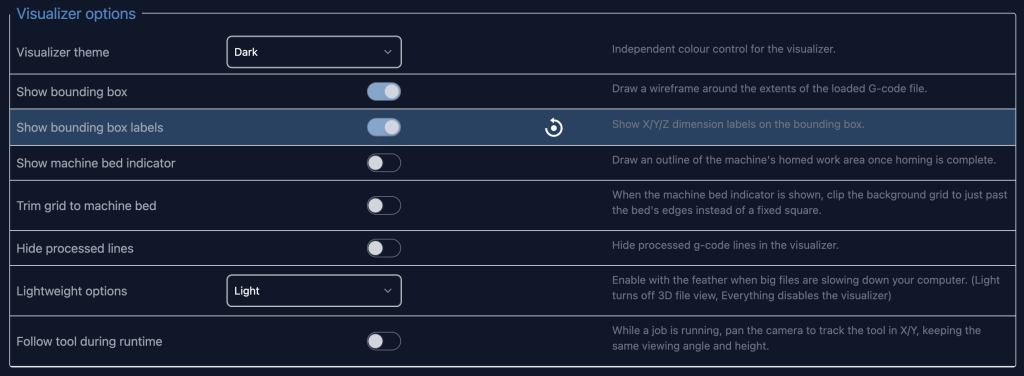
We’ve added so many new functionalities we’ve had to add a new config section just to handle it all, with more to come! That said, let’s go through some of the new features:
Config keeps growing!
Bounding Box and Labels
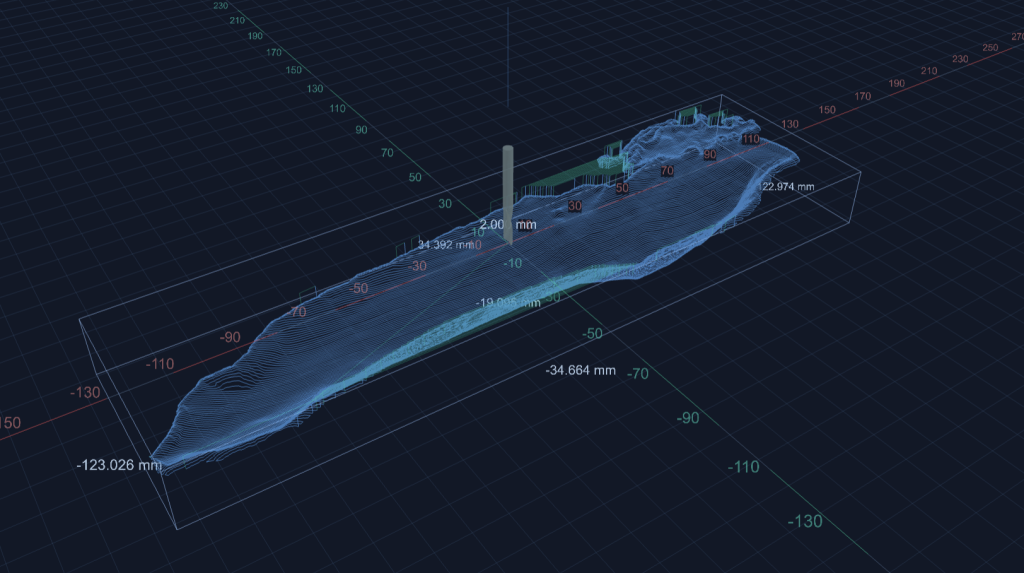
gSender has long included dimensions of your toolpath as part of the file information section. However, it’s not always visible and some users might want to see it represented in the visualizer itself. We’ve added an optional bounding box and labels, to show dimensions in the visualizer itself. This includes min and max values for all 3 axes.
Bounding box and labels
More Colour Themes
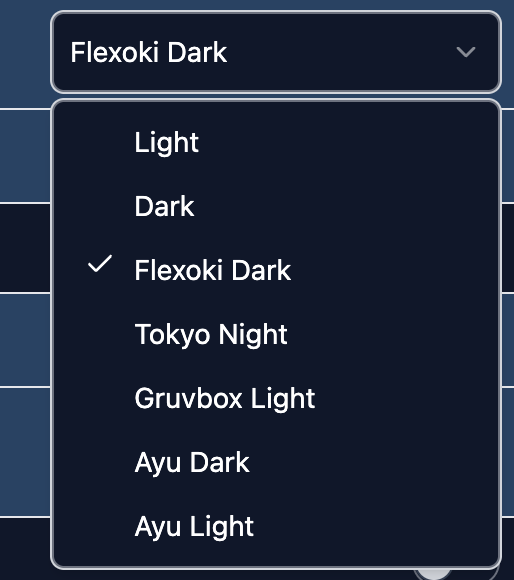
We’ve added a number of new color themes to the visualizer to spice up how your toolpaths look. We plan to expand this with community offerings in the future.
Some new theme options
Sharper View
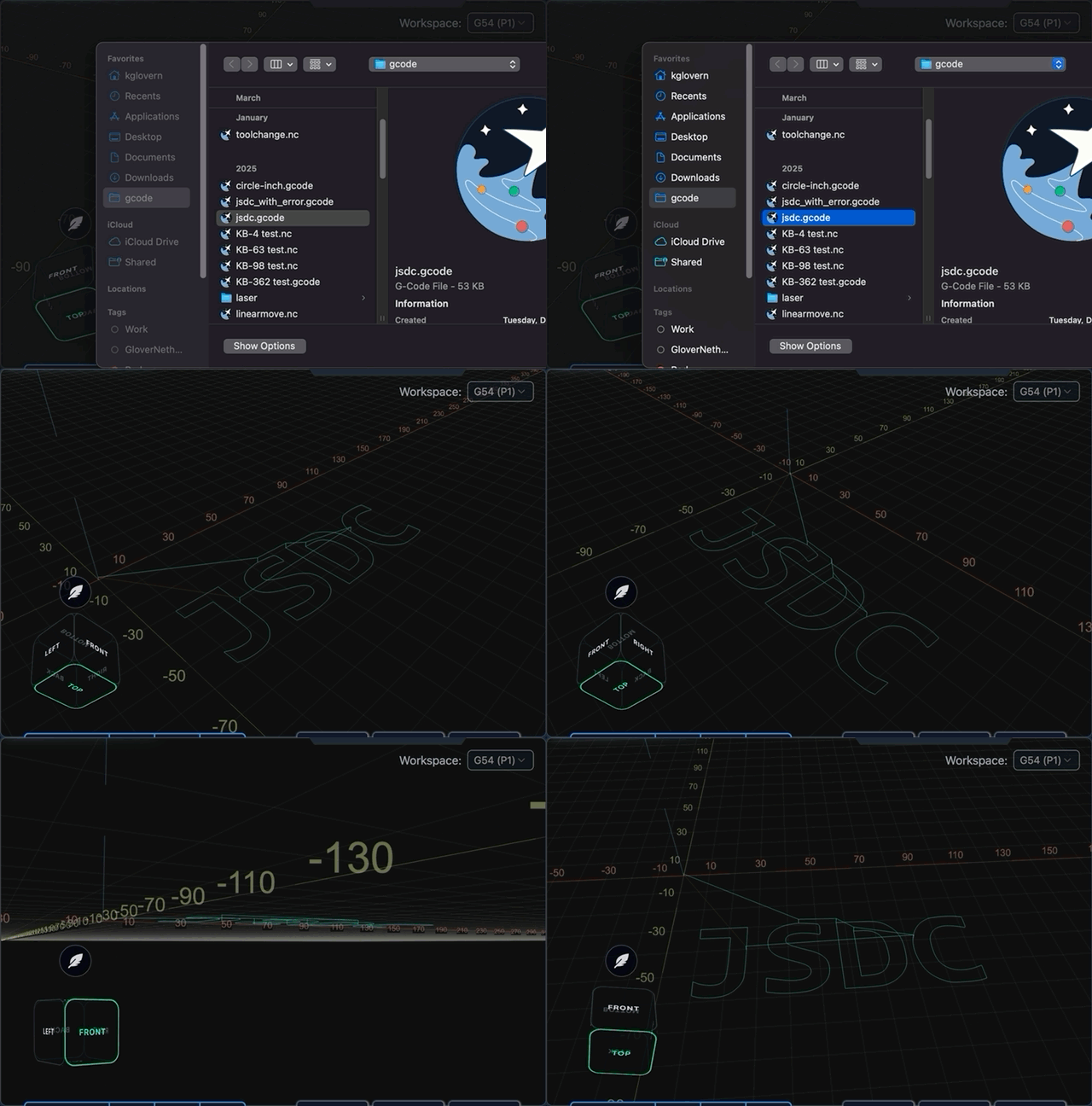
We’ve overhauled how toolpath lines are visualized along with webGL materials used. We’ve reduced the number of axis ticks to cut down on visual clutter and improve performance by reducing the number of sprites. Lines themselves should also look crisper than the previous implemenetation.
We’ve also added smoother camera controls, a fully 3d aware camera cube that lets you easily jump to faces, and better motion control on touch – which adds up to a much nicer experience when interacting with the visualizer.
New Visualizer
Better SVG Visualization
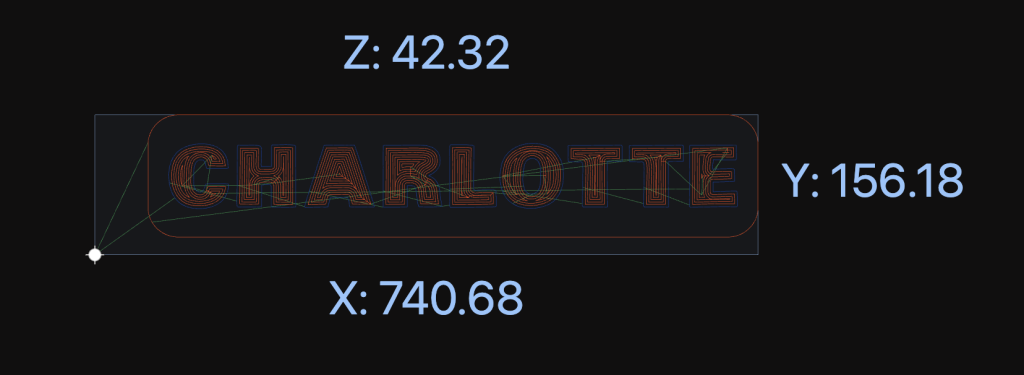
SVG visualization should be more performant, due to us aggressively deduping XY coordinates at different Zs. We’ve added a bounding box, and a reference point for where the toolpath zero is located, which is information that was missing in the previous implementation. It’s also now theme aware and includes tool change colors for any files with M6 commands.
On top of that, a simple crosshair now tracks position when running a job – so it’s not just a static image anymore, its a fully usable option when interacting with your CNC.
SVG Visualizer update
Machine Boundary and Keepout Indicators
One of the more confusing aspects for new CNC owners is the distinction between workspace coordinates and machine coordinates. With the new machine bed outline and trimming grid options, your visualizer is now a much closer representation of your machine in 3d space.
If your CNC has homing capabilites, when setting a zero, your visualizer will update to show where the toolpath will cut according to your max travel values, making it much more obvious if you run the risk of going outside your limits.
On top of this, if you have an ATC, the keepout area is highlighted, so you’re more aware of the potential to run into that before it happens.
Bringing the visualizer closer to the machine’s actual 3D workspace should make positioning and machine limits much easier to understand, especially for newer CNC users.
3D Visualization
Not ready for Edge-1 but in the works is an even newer way to view your toolpaths – fully 3D! Know what your toolpath should look like before you cut a single chip. We’re not 100% sure where this will integrate yet, but we’re likely looking at a way to step through your file and see the end/in-progress results ahead of time.
Ramming our new visualizer down your throat
Plugins
Philosophy
One of the hardest parts of developing software such as gSender is determining which features we want to add next. Sometimes, functionality is so commonly requested that working on adding it just makes sense. Other times, it’s determined by engineering projects in-house, such as the ATC, which lead to a host of features in gSender. The hard part is determining how and when to tackle the lesser requested features – because not every feature is useful to every user and we don’t want to stray too far from the core value of gSender as an easy-to-use sending software.
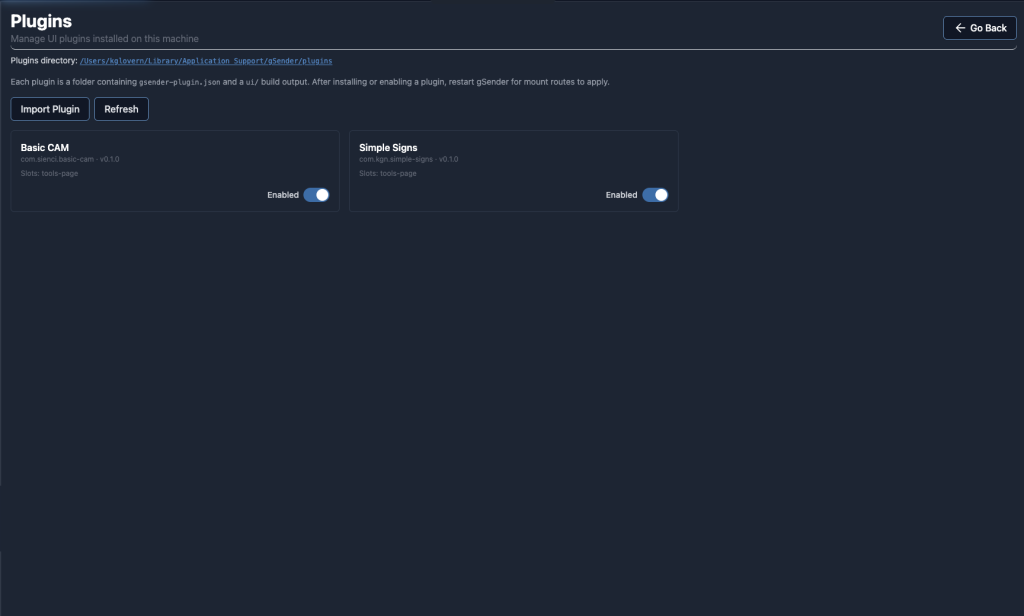
Due to this, we’re adding a Plugin system to gSender. A plugin is a standalone tool, usable within gSender, to accomplish any goal the developer sees fit. Plugins are shareable, letting users pick and choose what they want in their sender software.
This also lets the community at large develop features at their discretion for their specific use cases.
One major benefit is that this means functionality can be added to gSender outside the boundaries of major or minor releases – so both community and in-house plugins can become available more often than our normal release schedule.
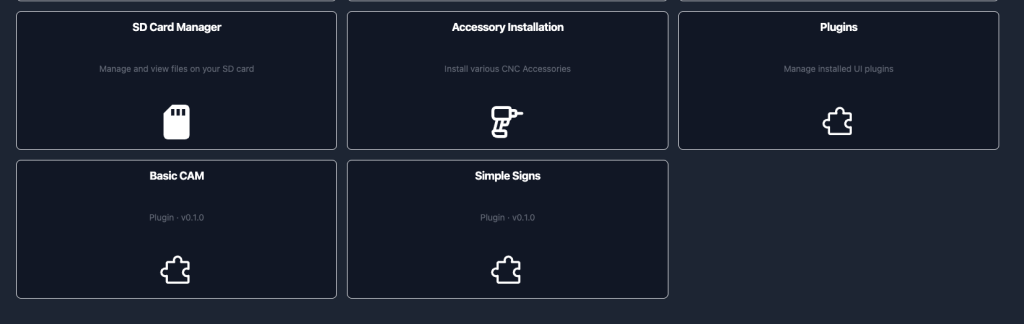
We’re still honing the user experience, but the goal is to have installing (or removing) a plugin as easy as point and click within gSender, with the ability to disable and remove a plugin with no further issues. Installed plugins are accessible via the Tools page, and managed via the plugins tool.
#image_title
We’re excited to see what the community at large can developer for gSender plugins – but we also have some samples to show off.
Plugins show up as tools
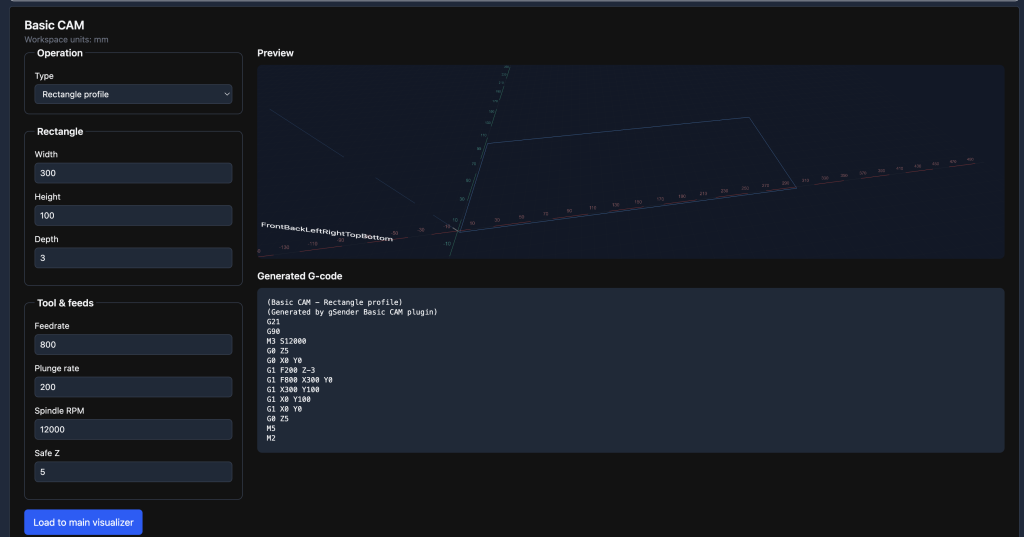
Sample Plugin – Simple Line and Shape CAM
3D Printing has Benchy as a first project, but CNC doesn’t really have an equivalent. You’ve setup your machine, installed your software, and have no easy way to enjoy the fruits of your labour without a massive context switch to some design software. It’d be nice if you could setup a simple project that you can run right away.
The basic cam plugin lets you do this. Setup a triangle, maybe some text, and you’ve got a basic sign – all from within gSender.
We’re going to continue to expand this tool to add a few more options (text coming, for example), but that’s the vibe and philosophy behind it. We hope other plugins that generate more complex g-code will be developed and shared by the community.
Simple cam is simple
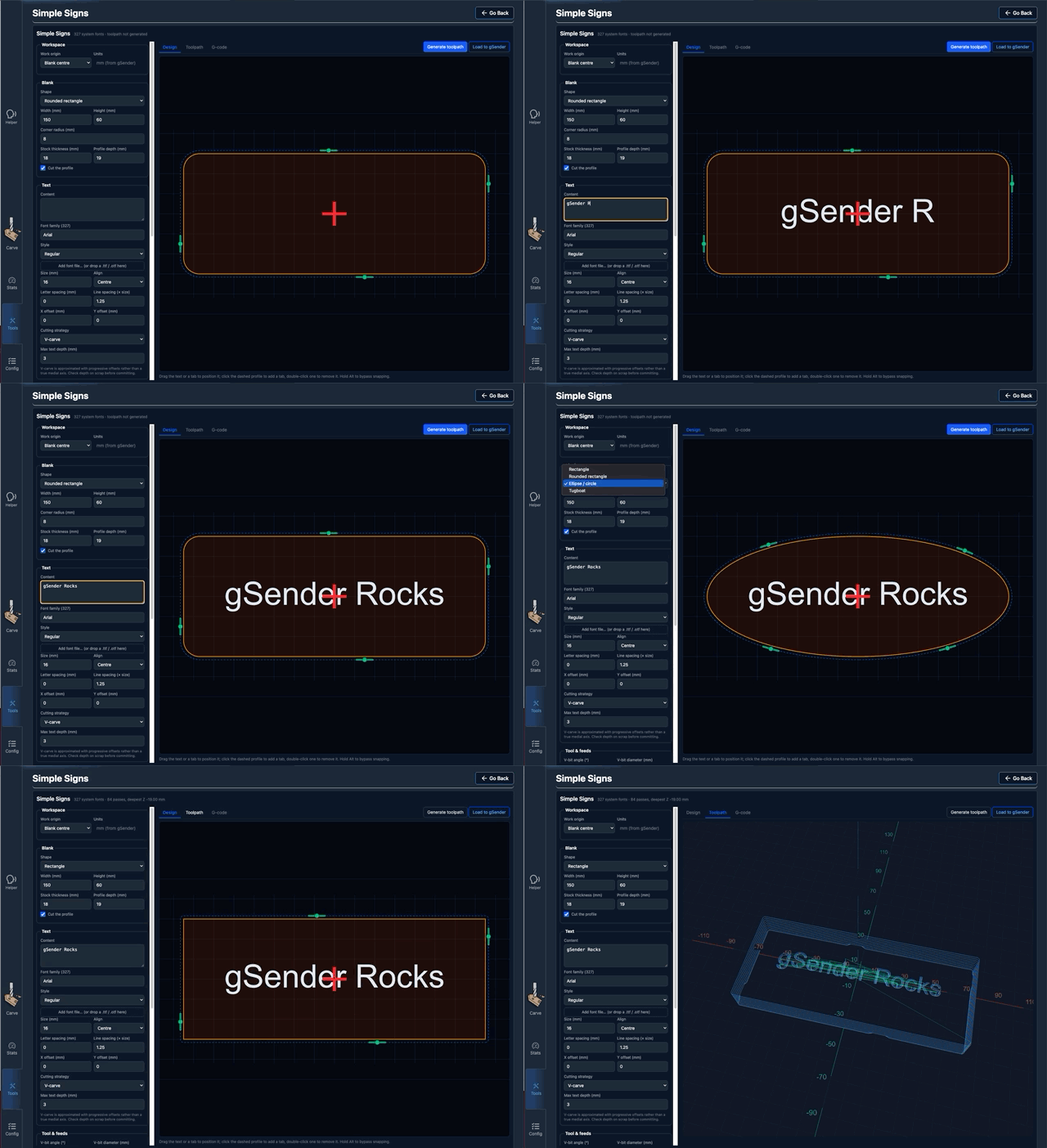
Sample Plugin – Simple Sign Maker
One of the problems with onboarding CNC users vs 3D printing users is the context switch from setting up your hardware and software to designing and exporting something to actually cut to see your machine in action.
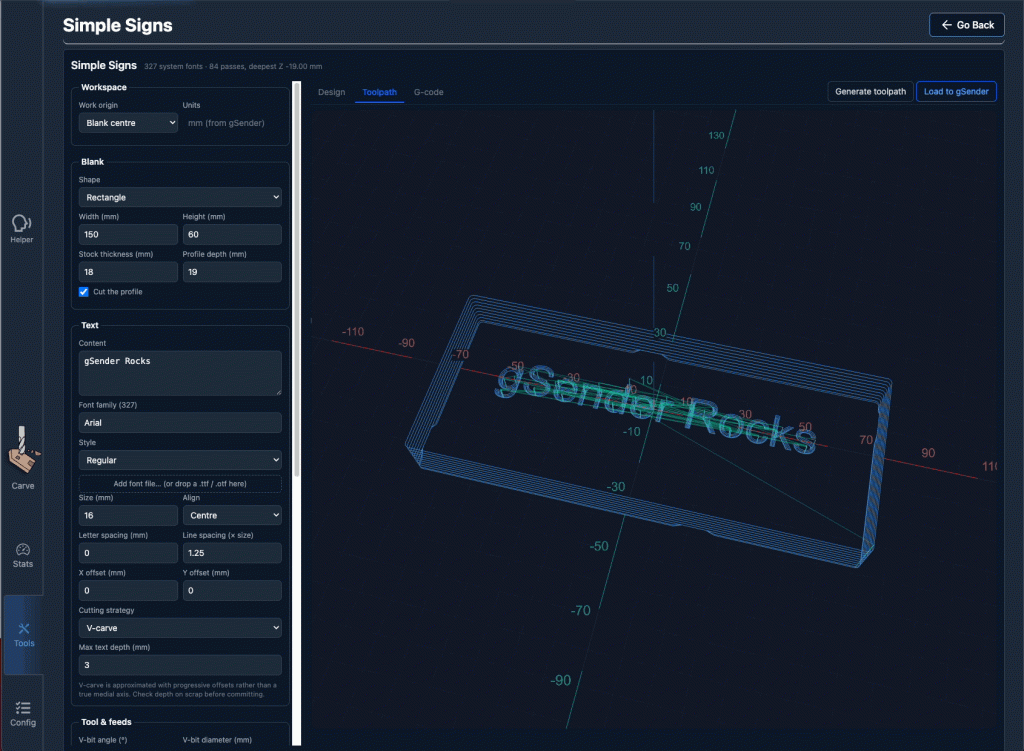
This plugin hope to address it by making it easy to add some text to a shape for a simple sign – so you can make chips fly and see the results of your efforts, and in the end get a little piece of wood with your name on it.
Pick a preset shape, pick your text and fonts, and you’re ready to carve.
I want to see chips
Adding or removing tabs is as simple as clicking on the profile – and they can be dragged around based on your workholding requirements
Tabbing out
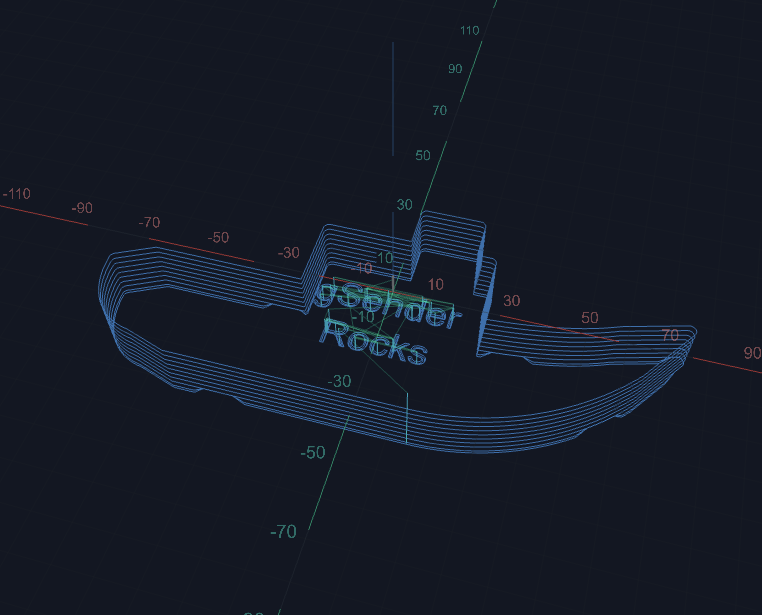
… And yes, we have a benchy
Toot toot
Pendant UI
Philosophy
gSender has been a Raspberry Pi-friendly application since inception. That said, it’s primarily a desktop application, and has historically required a fair amount of processing power to run well.
With recent optimizations, we’re looking at exploring alternative ways to interact with gSender, and are working on a pendant-style view. Designed from the ground up with touch focus in mind, this new pendant view is an entirely new user experience that runs well on integrated CM4 modules.
Featuring noticeably larger buttons, a SVG visualizer, and newly reorganized tools in expandable drawers, it’s the same old gSender in an all new responsive, and touch-forward view.
We hope to have this specific configuration available as both a standalone application and usable within main gSender proper for those who prefer it using an opt-in configuration.
We are internally exploring providing a bespoke CM4/touchscreen offering as a more affordable alternative to the gControl panel computer in the future using this specific application. That said, the application itself will always be free – and installable/usable on the gControl if you already own one and prefer this form factor.
Pendant in Action
Connection and Job Loading
Connection has been redesigned to be touch focused – one click to list, one click to connect, and you can hold to disconnect.
Machine status has been redesigned to be less intrusive, and includes a number of new animations depending on firmware state.
The visualizer itself is smaller, and limited to a top down view – but you still get important information like the origin and location as the job runs, along with various toolchanges.
Connecting and jogging around
Tool Drawers
Most of the functionality has been moved into expandable drawers that are only visible when you need them. Drawers have 2 states – partial and fully expanded.
Partially expanded should be the quick info and actions you need. For example, for the file tab it’s the file info like name and bounding box.
For the fully expanded, it’s more rare configuration options or other functionality. As an example, when the file drawer is expanded with no file loaded, you get a full list of recent files. If a file is loaded, you get the contents of that file and the g-code editor.
Same philosophy for the probe drawer – partial expanded shows your current probe configuration and lets you just hit go. When fully expanded, you get a touch friendly guided process to configure your probe diameter, probe corner, and check continuity before running.
Don’t drop your drawers, expand them
Other Small Things
There’s a number of other features you may notice in the upcoming Edge release.
We’re expanding the helper to better tie into our resources, so if you get an error or alarm you’re better equipped to deal with it.
A number of new config options, including probe retract speed and backup settings directories are added.
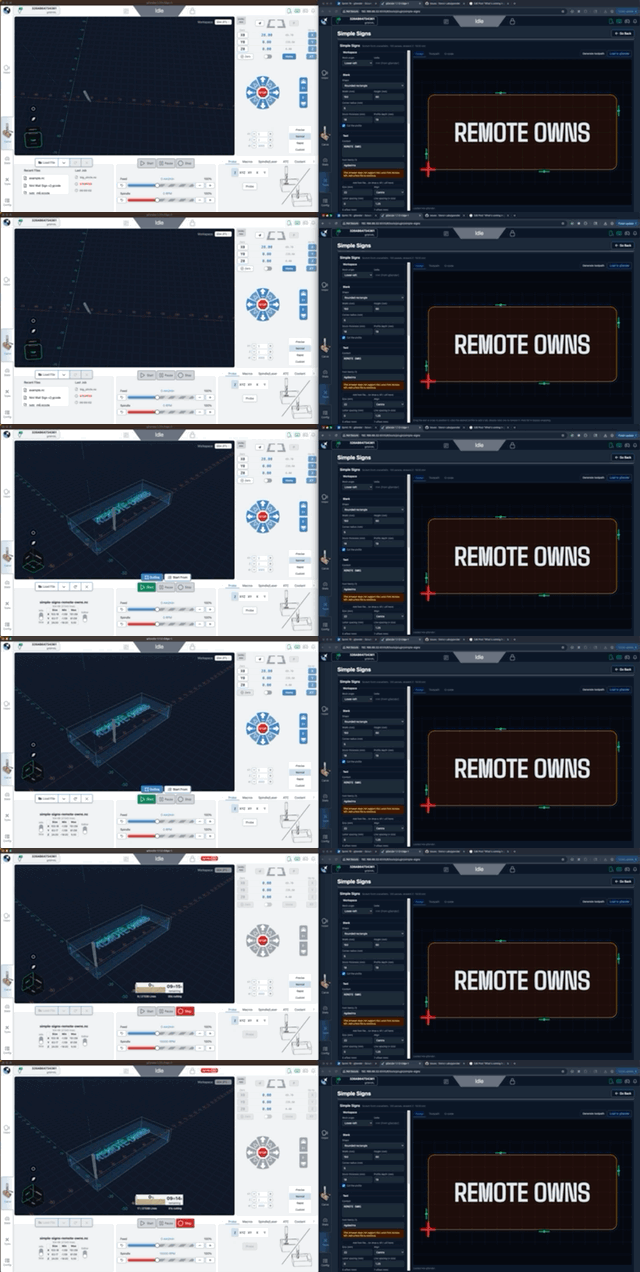
Remote mode now will automatically connect to an open Desktop connection – so no need to reconnect a second time on your remote client be it your phone, tablet, or a shop PC
There’s an added benefit to this for remote users – imagine designing something in a plugin connected remotely on your desktop PC, and with one click of “Load to gSender” it’s already loaded on the desktop client of your shop PC, ready to carve!
We’ve also made a host of bug fixes, UX improvements, and tweaks to dark mode. There will be a more comprehensive list of changes and new features in the official post on release.
…And Much Much More
This is a quick overview of some of the features you can expect in the upcoming Edge-1 release. We also have a number of future improvements and features we can’t wait to share with you – but that’ll have to wait until the next blog post.
We’re really looking forward to the community getting their hands on this version and giving us their feedback. No firm date, but mid-August seems likely for public release – although everything is available on Github for testing now, if you’re technically inclined.
Hey folks, gSender 1.6.3 with a number of fixes, behaviour improvements, and features.
Here’s what’s included in this update
New stuff you can use
Support for the new LongMill MK3 profiles.
A new flashing option for the upcoming SLB-Lite using UF2
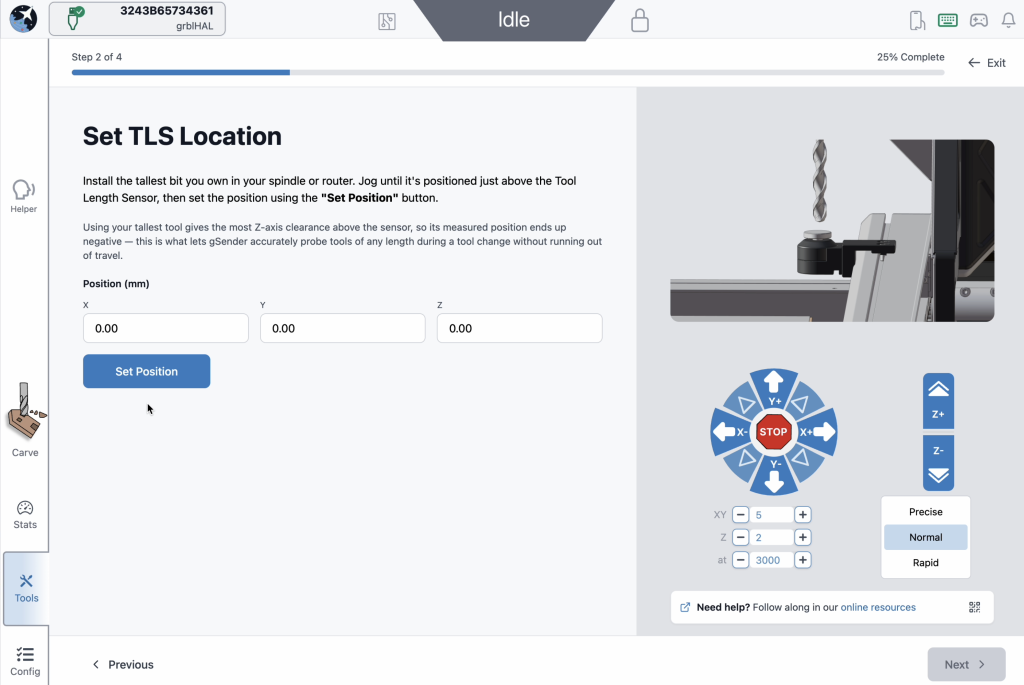
A new TLS installation wizard, found in the Accessory Installation tool. It walks you step by step through picking your probe locations and setting up your toolchanging routine.
#image_title
You can now set a custom feed rate for the final probe movement, instead of it always using the default Rapid speed.
The SD tool now lets you upload several files at once instead of one at a time.
The toolchange wizard now shows a “pending” state while it’s finishing up moves, and it pops up a little closer to when the actual tool change happens, so it feels more natural.
Smoother and more reliable
Changing toolchange or passthrough Config settings now applies right away, no more reconnecting or reloading your file.
Fixed a laser/PWM issue so it works properly without unexpected spindle behavior on grblHAL
Feeder Position variables pos{axis} and mpos{axis} are now always converted to millimeters, even if your machine is set to report in inches (13=1)
Homing status shows up more consistently for machines that are already homed when you connect.
Tool Timeline Probe status now considers non-0 values probed, not just negative values.
Job progress is easier to read with a new background behind the line count.
Made several changes to prevent your Config settings file (sender_rc) from getting corrupted, and if it somehow does, the app will no longer fail to start.
Firmware profile updates
Updated to support the latest grblHAL firmware, including changes to how lasers and PWM work.
Bugs squashed
Fixed the tool timeline showing the the original, non-remapped value when minimized
Fixed a probe dialog bug where connectivity tests would falsely show as passing if enabled when opened
Fixed a display issue in the Config tool when undoing changes to certain values.
Fixed the single-axis homing toggle appearing when homing disabled.
Fixed the park shortcut to worked when the firmware reports homed status
Fixed job progress not updating properly after tool changes pausing progress.
Full Changelog
Added LongMill MK3 profiles.
Added flashing path for new SLB-Lite using $UF2.
Added TLS installation wizard to the accessory installation tool.
Added ability to specify feed rate on final probe movements — default 0 continues to use G0; any other value uses G1 Fx where x is the configured value.
SD tool now allows uploading multiple files at the same time.
Added pending toolchange state to the toolchange wizard while already-planned lines finish their motions, and delayed wizard appearance until closer to the actual M6 command.
Updating the toolchange passthrough setting now updates the controller without reconnecting or reloading a file.
Updating the passthrough setting in Config updates that option without requiring a file reload or reconnect.
No longer swaps spindle min/max for grblHAL, so PWM can be used as a laser without issues.
pos{axis} and mpos{axis} feeder variables are now always returned in mm, regardless of report-in-inches ($13) status.
Homing status on connect for already-homed grblHAL devices is now more consistent.
Tool probe status now allows positive values — only 0 is considered unprobed.
Probe status badge in the tool timeline now only shows when using grblHAL with ATC=1 (tc.macro exists).
Added background to job progress line count for readability when the visualizer is disabled.
ATC options tool is now disabled if no SD card is mounted.
Improved reliability of Config Store truncation.
Added various updates to prevent the ConfigStore file (sender_rc) from becoming corrupted.
Corrupted ConfigStore files no longer block application startup.
Various firmware updates for the latest grblHAL core version.
Updated grblHAL profiles for the new firmware release — mostly related to laser/PWM2 behaviors.
Entering laser mode on grblHAL no longer swaps $30 and $31 with the laser equivalents.
Fixed tool timeline not reflecting the remapped tool number after minimizing.
Fixed issue where opening the run probe dialog with connectivity would cause all future connectivity tests to pass immediately.
Fixed issue where restoring an altered EEPROM value in Config without applying wouldn’t update the UI with the correct value in the Config tool.
Fixed toggling single-axis homing on and then off in the on-state not showing the original “go to” buttons.
Fixed backwards logic on the park shortcut, allowing usage when homed.
Fixed job progress not updating correctly after a tool change was handled via one of the wizard strategies.
As always, thanks for your continued support and feedback. If you run into anything unexpected, let us know!
Another busy June has come and gone. Welcome to our latest update!
Employee Appreciation Day
Lead Times For Major Products
AltMill 2×4 and 4x4s are now shipping quickly, typically in 2 weeks or sooner. We have stockpiled some assemblies and full machines to help keep our lead times low.
Batch 2 of 4×8 machines are now in production, and we are expecting units to start shipping in August.
All spindle kits (minus the ATC) are now shipping within 2 weeks as well. We are now in production of Batch 2 of ATCs; new orders being placed now are expected to ship in August-September.
For orders that have already been placed, please refer to the estimate provided in the month/week that you ordered the product. Please note that the lead times that are presented on the product page only refer to orders placed at that time. Your order lead time will be different if you have already placed an order in a prior month.
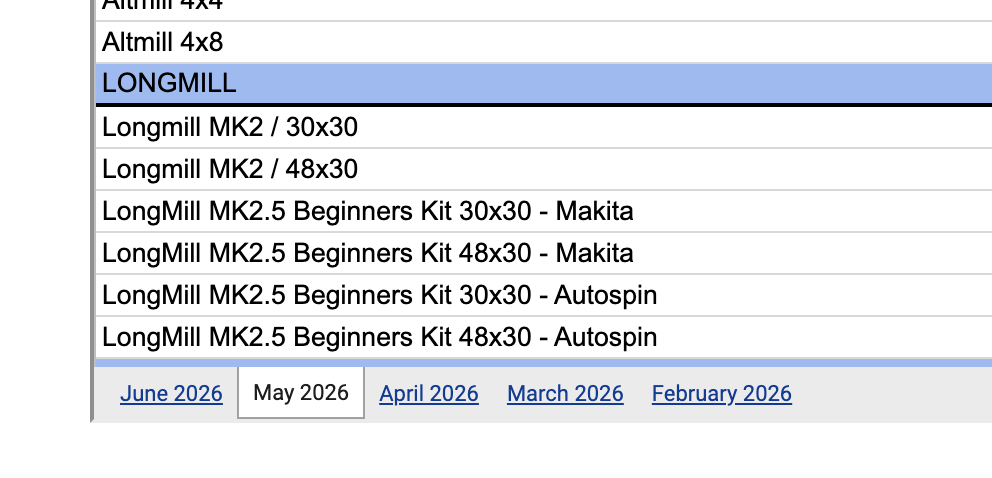
You can see the tabs for each month at the bottom of the sheet on the Order Status page
LongMill MK2.5s are shipping within 1 week, and LongMill MK3s are also expected to start shipping in September.
For the latest list of shipping timelines, please check out our Order Status page.
Catching up on Maintenance Stuff
The last few months have been pretty busy with new product launches, but now that we’ve gotten through all of the big things, you should expect to see a bit of cleanup on our end, including:
Updates and cleanup to resources and documentation
Updates and cleanup for open source files and documentation
Uploading of maintence and replacement parts on our store
Continued training for our customer support team
Continued improvement in gSender, our firmware and other parts of our ecosystem
Development of ancillary technologies and products, like a CNC control pendant, sensorless homing motors and vacuum workholding
I don’t think I can list every single little detail, but users should expect to see small changes come down over the next few months.
Tool Length Sensor
Although we’ve mentioned this a few times in saying that gSender fully supports a tool length sensor, and users can/have installed a tool length sensor on machines with aftermarket TLS, we have now finally made the TLS sensor available to all users.
As you may know, the Auto Tool Changer system requires a TLS system, so we designed a TLS sensor specifically for our machines and systems.
Benefits of the Sienci Labs TLS:
Greatly improves productivity for CNC projects that use multiple cutting tools by removing the need to manually re-zero each time the tool is changed
Break-away magnetic interface prevents damage to tools or machine in the event of any errors during tool length probing
Hardened 45HRC 4140PH probe disc ensures a durable tool probing surface and makes certain wear does not affect probing accuracy
Optical sensor provides high accuracy and repeatability, unaffected by temperature like other sensors
Flexible mounting allows the sensor to mount directly onto your AltMill or LongMill, or other CNC other machines.*
Last month we launched the LongMill MK3. We have continued to work on the production for the machine in anticipation of shipping in September this year. Most of our work has been in finalizing some of the mechanical design and pushing to production our fast turnaround parts.
Additionally, we have been finalizing our packaging design with plenty of destructive drop testing.
We also had a livestream to talk about LongMill MK3 engineering, design, philosophy, and more, so if you want to check that out, see below:
SLB-EXT V2 and SLB-LITE
First test cuts using the SLB-LiteFirst batch of fully populated next gen SLB boards!
We have continued to make progress in the second generation of SLB-EXT controllers. We have now received another 20 units of samples in early June for continued testing. Here’s some general work
Continued work on the firmware configurator tool to allow for users to customize their firmware for their needs
Minor fixes to board design and components (namely the fit and sizing of the power connector in this case)
Testing of signal consistency and noise
Real life testing and cutting with SLB-LITE
Work on the expansion board for further functionality
Looking at noise on the 5V regulator
Pricing Changes to gControl Panel Computer
Due to continuing instability in the cost of processors and memory, we are again increasing the price of the gControl panel computer. We are continuing to negotiate with our suppliers, but we expect that pricing will be updated for the following batch of units.
Pricing is expected to be updated as following: USD $529 / CAD $739. Please note that timing of the change and final pricing may vary over time.
As we’ve mentioned in prior updates, we do acknowledge that the cost of the computer is high, and so we are actively working on a longer term computing solution to bring the same or similar functionality at a lower price. This is not to say that the gControl panel computer is overpriced. In fact, for a industrial level, fanless panel computer, it’s quite inexpensive, but we do recognise that not all users need such an overkill piece of hardware.
Testing the budget version of “gControl”
Sensorless Homing
In a bid to reduce component count, reduce costs, and improve overall reliability, we are currently undergoing testing and development in sensorless homing technology in conjunction with our R&D with close-loop stepper motors.
Because of a closed loop motor’s inherent ability to detect when a motor loses steps, we can also use this feature to understand when a motor has reached the limit of its travel. In a traditional machine, a separate homing sensor or switch is used, which is triggered when the machine hits a limit. However in a sensorless homing setup the motor is used to detect the limit. A closed loop motor can do this because there is an encoder and electronics inside that compare the amount of rotation the controller has commanded it to turn versus the amount it actually turned. When there is a mismatch, the motor knows that it’s “lost steps”.
To make sensorless homing work, we need to tune and program the motor to improve the sensitivity of the motor, so that it can detect contact with the machine faster and more accurately. We can do this by varying the amount of power going to the motor, the speed, microstepping, touch off distance, filtering algorithms and more. Additionally, we need to consider the mechanical structure of the contact points.
While this is a bit of a tricky thing to get right, this technology has been proven to work very well in modern 3D printers, to the degree that most 3D printers rely on this technology alone for their homing sequence.
The advantages of sensorless homing is that we remove one of the potential weak points in the machine design, which is the homing sensor. While homing sensors are extremely reliable, due to the added complexity of installing them, the wiring, and the additional hardware, we believe that reducing component count can improve the overall reliability of the machine in the long run. Additionally, while the cost of the switches are fairly low, the cost reduction in removing the ancillary hardware, instructions for installing them, configuration, and more, we believe that we can see some decent cost savings overall.
Naturally, people are going to ask if their existing machines will be able to support sensorless homing. With some generations of motors, it is possible. However this does require re-flashing the motors and may require special tools. If your machine is working well with homing switches, it’s unlikely to be practical to move to a sensorless homing system and there is no practical performance differences when both systems are working well.
Vacuum Table Development
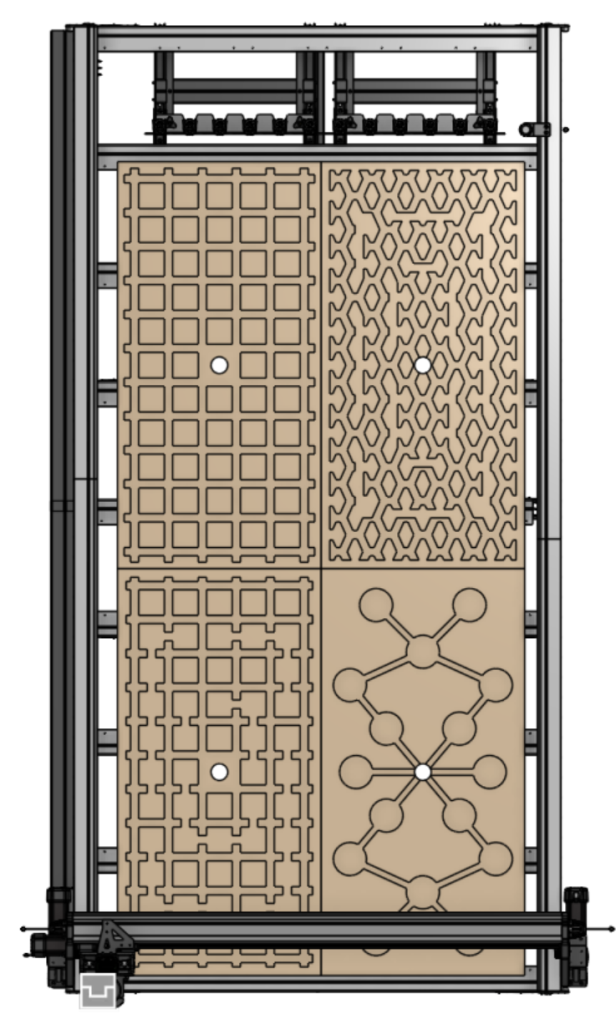
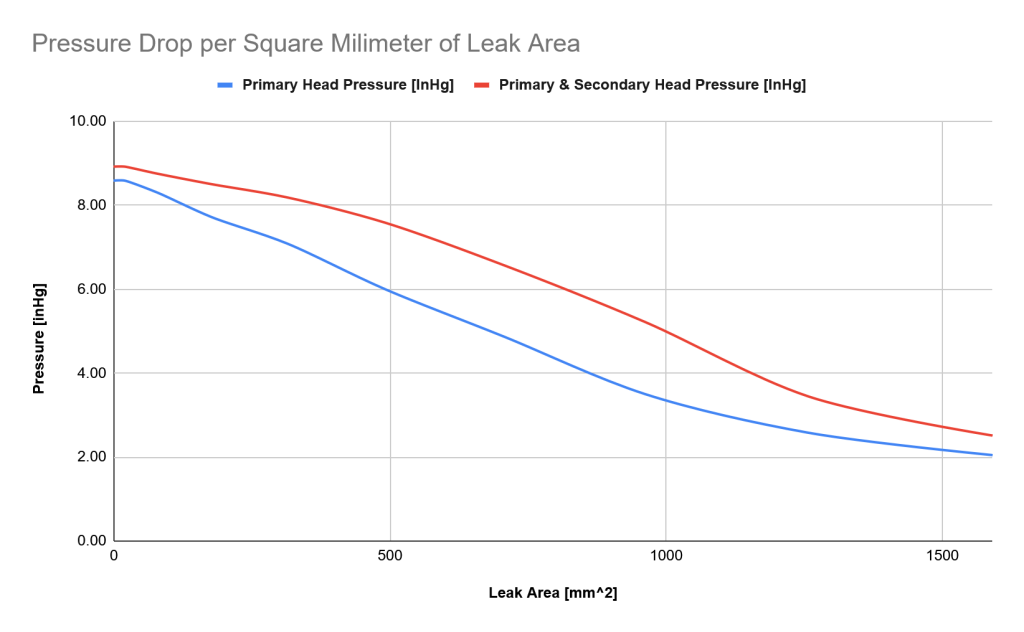
Over the last few months, especially coinciding with the AltMill 4×8, we’ve been working on a vacuum table solution in the background. As we continue to work on more advance systems focused on more professional level applications, we naturally looked to adding a vacuum table system to our machines.
Test patters for vacuum holddownTesting data for vacuum table designs
Most of our work is currently exploratory, trying to understand:
What sort of vacuum pump and architecture we should use
How much performance we need and how much performance we can get in different configurations
Potential shipping and logistics processes
Sienci Labs will be at IWF Atlanta
We will be at IWF Atlanta! We are working on the planning and logistics for coming down, but we’ll be bringing a few team members down to show case some of our cool products and chat with members of the community.
IWF Atlanta is one of, if not the largest woodworking fairs in the world.
If you’d like to attend, make sure to check out https://iwfatlanta.com
Hey everyone, welcome back to our June 2026 production update!
More Open Positions at Sienci Labs
We have a couple official positions now posted on Indeed as we continue to grow our team. With continual expansion plus the development and release of new products, we’re constantly looking for new people to join our team.
We also have a few positions likely to come online in the coming months as well, including people to join our engineering team for hardware and electronics, additional software developers to focus on gSender development, and an in-house CNC instructor.
If you want to reach out to us because you feel like you could be a good fit with our company, please feel free to submit through our general application form.
Changes to Website Coming Soon
Ever since our beginning, our development on our website has been shared between a few different people in the company, but we never had a dedicated web developer on the team. But now, with the recent addition to our team to work on our website, you can expect to see some updates and changes coming down the pipeline. Our main focus right now is improving the user experience on the customer service side through our Contact Us page, plus the Resources to make it easier to find information faster.
Test siteExample wireframes
LongMill MK3
The LongMill MK3 has now launched! If you want to learn more about it, read our article.
In other news, we’ve been continuing to work on a few things this month, including:
Continual design and testing of packaging
Development of the SLB-LITE
Machine testing
Dust shoe design and testing
SLB-LITE and SLB-EXT V2
Packaging samples for the SLB-EXT V2
A lot of work done on the new generation of SLBs, including:
New samples of the packaging
Testing and development of key features, such as the RGB LED support, Ethernet communication and board expansion design
Reliability testing with early prototypes
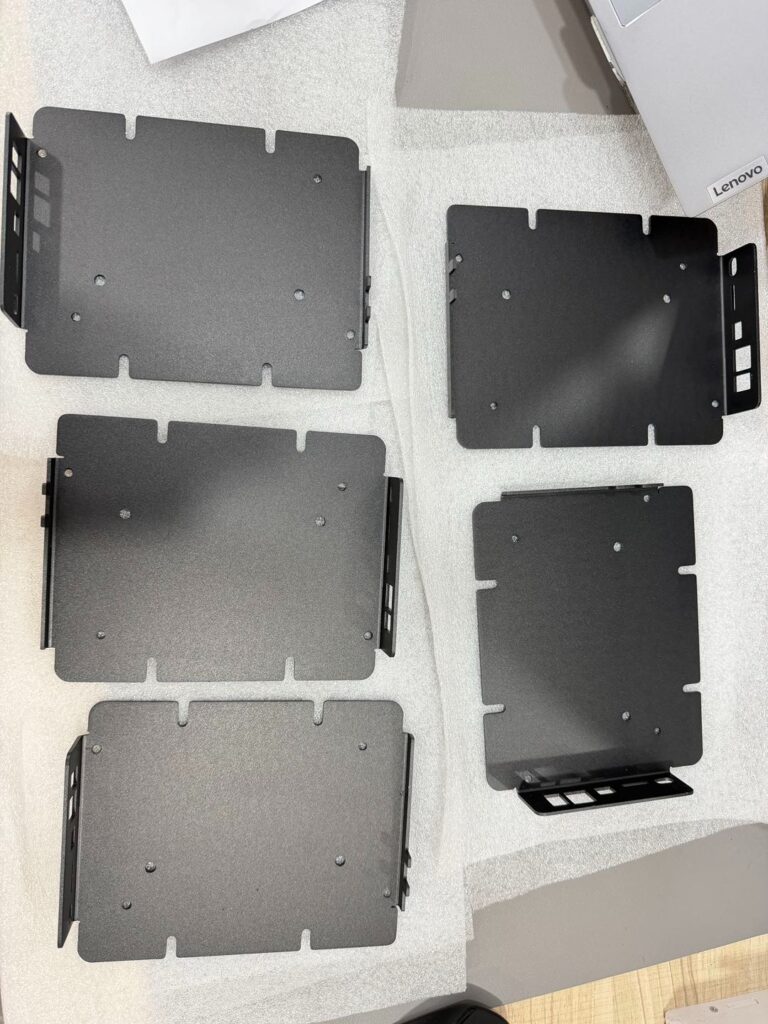
Manufacturing of key components, such as the front and back plates of the controller enclosure
Back panel samples
AltMill 4×8
As mentioned in our last update, we’re in the process of ordering another 300 machines for the new batch. Otherwise we’ve been continuing to do long term accelerated wear testing for the AltMill 4×8, essentially running the machine constantly back and forth 100,000 times at high speed and acceleration, with sudden stops and starts. For context, this is a super extreme condition and we expect no one to ever come close to running it at these conditions.
Here are some of the findings:
Change in backlash is essentially non-existent, under 2 thou
Motors heat up to 92C, which is close to the 90C limit that the gearbox can handle
Besides the bearing retaining ring on the gearbox starting to come loose, all other components are still at the torque they need to be
Overall, this means:
Under normal operating conditions, it’s unlikely for users to see any significant decline in performance or accuracy
Motors only heat up to their limit at the most extreme conditions
We can reduce the chance of the bearing retaining ring coming loose with adding some locktite during assembly. However, given that the machine was run at extreme conditions where the amount of vibration is significantly higher than normal operating conditions, we believe that this is not an issue. We will include in maintenance documentation for users to check the ring during regular maintenance. The good thing is also that when this item becomes loose, it is visually obvious, which makes it easy to address if needed.
Clear Cut Dust Shoe
When we first launched the Clear Cut Dust Shoe for the 80mm spindles, we didn’t anticipate how popular they would be. We had originally set aside around 100 dust shoes for individual sale, which were all sold within a few days. The remaining dust shoes have been set aside to include with the Spindle Kits for the LongMill and AltMill.
We are expecting some more dust shoes to come in in 2 weeks and another batch in August. We will announce very shortly when they will be available again for single purchase.
Spindle Lead Times
Spindle lead times have been long for the past few months, as we received more orders specifically for the 1.5KW spindles than we were expecting. We’re happy to announce that a new batch of spindles have come in and we are working through backlogs. Please check the orders status page for the latest lead times.
Some Interesting Proof of Concept Projects
If you’re interested in knowing what else we have going on, we have a few “proof-of-concept” projects that we worked on in the past month. These are projects that don’t have any commercial direction at the moment, but highlights our interest in pushing the technology further and could be things you may see in the future. We have a lot of different “proof-of-concepts” that we work on, but these were two that I thought were particularly cool.
Perhaps it’s also worth mentioning that when you buy stuff from us, a lot of that money goes back into R&D to develop products and updates that benefits the ecosystem as a whole, so remember that it’s not just an investment you’re making today, but it can impact what your machine and the machines of others can do in the future.
“Autofeedrate“
One of the challenging things with setting up a CNC for cuts is figuring out the speeds and feeds. With the implementation of “autofeedrate”, we can actively adjust the feedrate in real time based on the load on the spindle. In essence, we can take a current reading from the spindle cable and adjust the feedrate down to optimize the load on the spindle in relation to how much material it is cutting. This means that if there’s more cutting capacity that the machine can handle, it can automatically run faster. Or, and likely more important to the average user, reduce the feedrate before the spindle can stall.
In industry, this is a feature that is used to optimize feeds and speeds in manufacturing, where shaving seconds off the cycle time can result in significant cost savings in a production facility. However, the implementation of this technology can cost thousands, if not tens of thousands of dollars.
The use of autofeedrate in a hobby level setting, on the other hand, would allow users to reduce the amount of guesswork required to set feeds and speeds on their machine, especially due to differences in material, machine, and tooling differences. In essence, one of the challenging parts of providing a streamlined experience in CNCing is the fact that there are so many variables to take into account. By having an active system in monitoring load and adjusting for these factors could help optimize cuts and reduce the knowledge needed to operate a machine.
The exciting part of this technology is that the hardware and sensors needed to implement this can be done on most existing machines and are fairly inexpensive ($20-50). The software and signal processing is the more complicated and expensive part.
gSender on CM4
Up until recent months, gSender has been a fairly processor-intensive program. With recent improvements to gSender, we’ve managed significant speed and reliability improvements. However, we mostly see and expect users to run the program on full scale computers and laptops.
Kevin (one of our senior software developers), has been working on a new proof of concept we are expecting to funnel into a wider development of a more affordable control panel to control grblHAL machines.
To be frank, a solution like the gControl Panel Computer, is expensive for the average hobby user. While we see a big chunk of AltMill users buy the gControl Panel Computer, very few use it with a LongMill. I suspect this has mostly to do with the market that we are serving with the LongMill since it is a lower cost machine.
So what is the gSender on CM4? CM4 is a compute module, or a single board computer. They are generally cheaper than full size computers ($30-100), and are designed more for embedded applications and for light computing. Oftentimes, a CM4 is used as a development platform for testing before going into a full integrated computer design, as they are easy to set up and can be purchased off the shelf.
Since something like the CM4 has much less processing power than something like the N150 Intel processor found in gControl. This means gSender for CM4 needs to be optimized for that level of processing without losing functionality. This proof of concept shows the screenc apture of an optimized version of gSender designed for CM4.
One of the key things to note is the redesign of the UI, which is made to be touch screen friendly and work on smaller screens. In the long term, we expect to implement this solution into a computer that can act as an affordable controller or pendant so that users don’t need to plug in a laptop or buy a gControl for their machine.
gSender 1.6.2 is a smaller follow-up release focused on polishing up some edge-case issues that cropped up after 1.6.0, along with a number of workflow and usability improvements across the application. A lot of this work targets firmware compatibility, ATC/tool change flows, and smoothing out a few rough edges reported by the community over the last little while.
Data collection and analytics
You may also notice that gSender prompts you again about analytics/data collection preferences after updating. If this feels familiar, you may have already responded to this prompt quite a while ago and simply forgotten about it. We’ve recently changed analytics providers, so we wanted to give everyone another opportunity to review and update their preferences.
The data collected is primarily general usage metrics, operating system information, and tool usage data that helps us understand what parts of the application are being used most often and where issues may be occurring.
As always, analytics participation is completely optional and can be enabled or disabled at any time in the Config section of the application.
General Fixes and updates
Updated firmware defaults to better account for TLS/probe misconfiguration scenarios
Various firmware default updates and compatibility improvements for newer firmware versions
Uploading to SD cards over ethernet is working correctly again
Laser power slider now behaves as expected on newer firmware
Spindle selector now works correctly on newer firmware
Laser offsets now map correctly to the updated Config key structure
Flash utility will now automatically select grblHAL firmware when SLB_DFU is detected
Exiting rotary mode will once again properly restore previous machine values
Non-enabled spindles will no longer appear in the spindle dropdown list
Spindle dropdown will now attempt to refresh itself automatically if empty in the Spindle/Laser drawer
UX and Visual
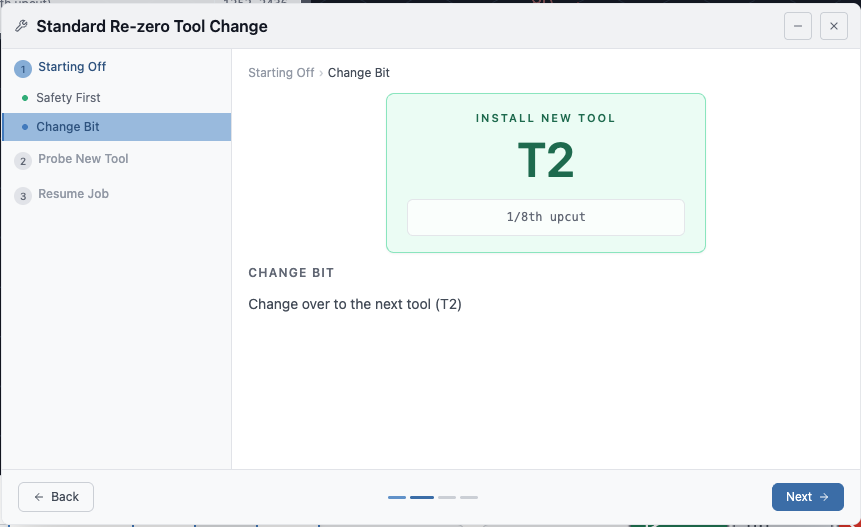
Numerous visual and workflow improvements to the tool change wizard
New Wizard
Tool change wizard will now resume the spindle before returning to the previous XY position.
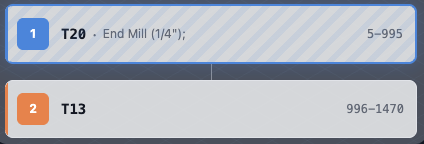
Tool change wizard and tool timeline now display annotation comments when no ATC nickname is set
Parsed Comments
Removed probed/unprobed status on firmware versions without a tool table
ATC Config will now store default values on first install instead of stored values
ATC Config will now warn in situations it failed to read the stored configuration file.
Squaring and motor tuning workflows now share the same jog popover for a more consistent experience
Spindle delay behaviour has been updated and is now an explicit configurable option for forced insertion when needed
Functionalities
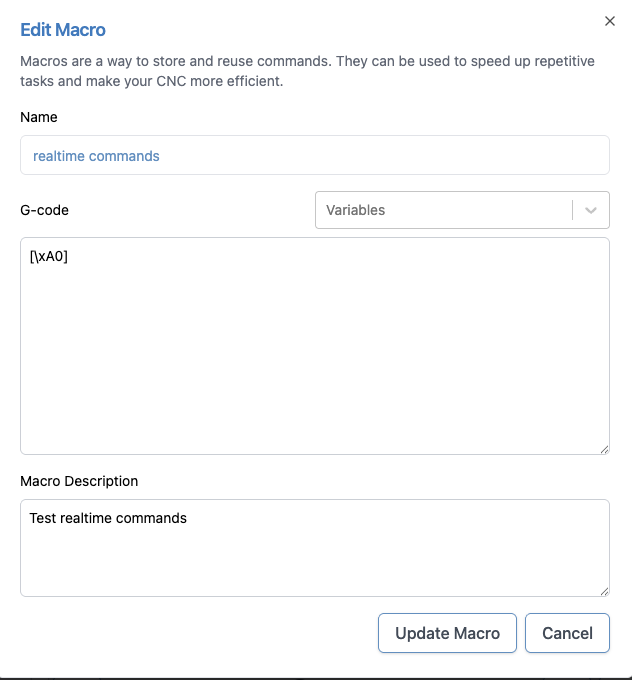
Macros can now send realtime commands using the [\xNN] format